

This is the seventh installment in a series of blogs addressing planning for the future. Previous installments include: Aging Safely in Your Own Home: A Comprehensive Guide, Senior Living Options: In-Home Care vs. Assisted Living, Legal Considerations and Aging, Nursing Home Red Flags, Is it Time for Memory Care, and Caregiving from a Distance: Strategies for Nurturing From Afar.
Caring for an elderly family member is a meaningful yet challenging role. Whether you became a caregiver gradually or suddenly and whether you’re an intermittent caregiver or providing care 24/7, there are valuable resources and practical suggestions available to support you along the way. In this blog post, we will explore how you can access the assistance you need and provide you with some practical tips to help ease the burden of the caregiving journey.
Form A Team

Don’t try to do it all yourself. Forming a caregiving team to care for an elderly parent is an effective way to, not only reduce the burden on any single caregiver, but also provide better care. Members of the team will bring with them different strengths and skills to provide the best possible care.
Assess the Needs
First, assess the care needs. This includes financial, legal, medical, emotional, and daily living needs. Consider the level of care required, whether it’s companionship, assistance with daily tasks, or more complex medical care.
Identify Potential Team Members
Make a list of family members, friends, and other individuals who may be willing and able to assist with caregiving. This could include siblings, other close relatives, close friends, or neighbors. If you are the primary caregiver, remember that even shaving off a few tasks can greatly relieve your burden: bill paying, grocery shopping, attending medical appointments, etc.
Assess Each Team Member’s Strengths
Understand each team member’s strengths and limitations. Identify tasks or roles that align with their skills and availability. Some may excel at medical care, while others are better at providing emotional support or clerical tasks.
Establish Communication
Set up a regular communication system for the caregiving team. Use tools like email, group chats, shared documents, or caregiving apps to keep everyone informed and coordinated. When they see how much you are doing they are more apt to offer help and jump in when you ask!
Consider Professional Assistance
If finances allow, consider enlisting the help of professional caregivers, such as a care manager, home health aides, or nursing, PT, and OT for tasks that require specialized skills. See our prior blog WHAT IS CARE MANAGEMENT. Our BABW team can provided one time home safety assessments or ongoing therapy support.
Organize Important Information

Update and organize all the important papers and information so that it is up to date and easy to find. This includes medical information as well as legal documents and bills. An outdated file won’t do you much good when you are sitting in the emergency room at midnight!
Create a file with the following information
- Physician contact information
- Allergies
- Health history (e.g. surgeries, other medical conditions)
- Current medication list
- Insurance information
- Medical insurance including supplemental plans and prescription plan
- Dental and vision insurance
- Long-term care insurance
- Legal documents: see our blog Legal Considerations and Aging
Communication with Medical Providers

In your role as caregiver, you may be involved in or the point person for communication with medical providers. Be prepared when attending medical visits.
- Routine medical visits: see our blog A Better Doctor Visit and this Doctor Visit Checklist to help you prepare in advance.
- In a crisis: effective Crisis Symptom Reporting can facilitate more efficient and better care. This resource will help you learn how to effectively report a crisis and how to communicate during ER visits. Prepare a Hospital Go Bag ahead of time in case of an unexpected emergency or ER vis.
Day to Day Care
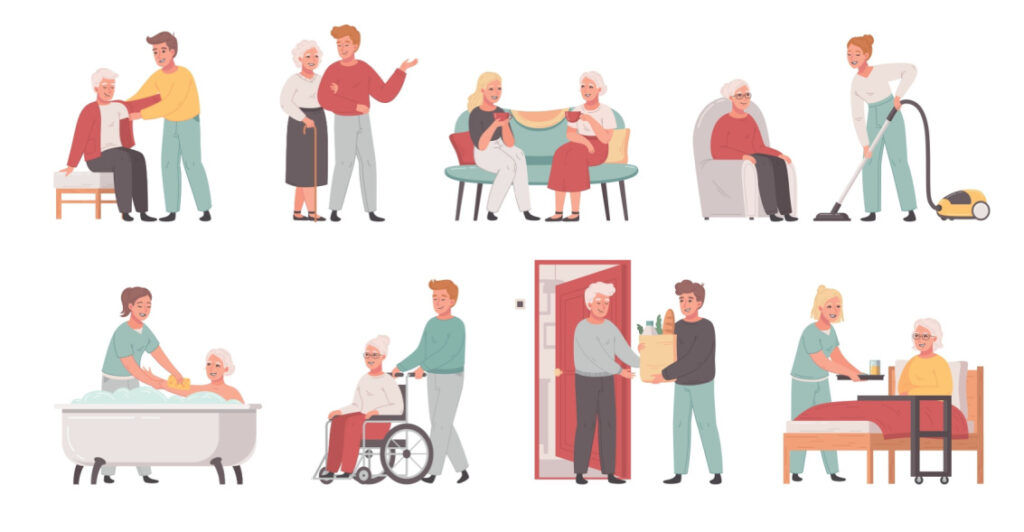
Day to day care can encompass a wide variety of tasks and, depending on the needs, can involve very intimate tasks such as bathing and toileting. Consider whom on the team is best suited to each of these tasks. The Caregiver Action Network website has some excellent tips, resources, and training videos for “around the clock” caregiving.
Tasks May Include:
- Medication Management
- Daily Living Activities (bathing, dressing, grooming, toileting, and eating, etc.)
- Mobility and Exercise
- Cognitive Stimulation
- Emotional Support
- Supervision for Safety
- Appointments and Health Monitoring
- Financial and Legal Matters
Caring for Yourself – Avoid Burn-Out

Caregiving is hard work. Do not discount your own health and wellbeing. If something happens to you, the caregiver, the care system you created is at risk for falling apart. Seeking help when needed is a sign of strength, not weakness
- Set realistic expectations
- Delegate tasks and responsibilities
- Set boundaries and learn to say NO
- Stay connected with friends and support groups
- Watch out for signs of depression and don’t delay in getting professional help
- Utilize respite care. Respite care is temporary substitute assistance that allows family caregivers to step away from their duties for a bit. You can be relieved for a few hours, a full day or overnight, or a stint of days or weeks.
Seek support from other caregivers. You are not alone!
Join a caregiver chat forum or support group. There are many available online. Two options are listed below:
- Chat Care offered by Caregiver Acton Network allows you to post a message, ask a question or offer support to other caregivers. Your name will not be displayed next to your messages so you can find honesty through anonymity. They also have topic and disease specific forum groups.
- Champions of Chaos offered by enABLE Care Management is a weekly peer support meeting for individuals navigating the aging process for someone else. These meeting are free. You do not need to be an enABLE client to participate.
RESOURCES
Did you find this topic interesting? Below are more in depth articles.
- Caregiver Action Network – Caregiver Action Network is a non-profit organization providing education, peer support, and resources to family caregivers across the country free of charge.
- 10 Tips for Family Caregivers – Caregiver Action Network
- Family Caregiver Toolbox – Caregiver Action Network
- Caregiving By Condition – Caregiver Action Network
- What to Do When You Become the Family Caregiver – US News
- Sustainable Caregiving – Theresa Wilbanks is an author, speaker, podcast host, founder of Sustainable Caregiving, and a Certified Caregiving Consultant™. The website has copious resources: newsletter, blogs, workshops, podcasts, and so much more. Check it out if you are a caregiver.
- New to Family Caregiving? 10 Tips on How to Get Started – AARP
- 5 Steps for First-Time Family Caregivers – AARP
- Chat Care caregiver chat forum- Caregiver Acton Network
- Champions of Chaos peer support meetings – enABLE Care Management
Joanne Bedwell, PT is the Resident Blogger at Be Active Be Well. She lives and works in San Francisco with her husband and two (almost) grown daughters. Having over 25 years of experience as a PT, she sees clients in their homes and teaches fitness classes in person and virtually.
DISCLAIMER: This article contains information that is intended to help the readers be better informed regarding health and health care. It is presented as general advice on these topics. This article is not intended to be a substitute for the medical advice of a licensed physician. The reader should consult with their doctor in any matters relating to his/her health.
We provide in-home assessments in the San Francisco Bay Area. Contact us for a personalized Physical Therapy, Occupational Therapy, or Speech Therapy assessment.