
What Happens in Your Brain While You Sleep
My love affair with sleep isn’t merely a preference; it’s a need that I honor diligently. My 7–8 uninterrupted hours of rest aren’t a luxury; they’re what keep me grounded, focused, and functioning at my best. When I talk about the importance of sleep, it isn’t just theory. It’s a form of self-care I’ve learned to protect.
Others, however, swear they need only a few hours of sleep a night. Work is too busy, life is too full, and sleep becomes negotiable. Is this you? If so, you’re not alone.
Think You Need Less Sleep as You Age? Think Again
Many people believe that as we age we simply need less sleep. In reality, research suggests the opposite. According to the National Sleep Foundation, adults age 65 and older should aim for seven to eight hours of sleep each night. Yet many people fall short. In fact, data from the Centers for Disease Control and Prevention show that about one-third of U.S. adults report getting less than the recommended seven hours of sleep per night.
Are there long term consequences from burning the candle at both ends?

The science says yes.
Sleep is of paramount importance to overall health and well-being. It’s a fundamental physiological process that allows the body and brain to rest, repair, and recharge. During sleep, the brain helps organize memories, restore the body, and even clear waste products that build up during the day.
Throughout the night, the brain moves through repeating stages of sleep known as the sleep cycle.
The 90-Minute Sleep Cycle
A typical sleep cycle lasts about 90 minutes, and most people complete four to six cycles each night. Each cycle includes several stages of sleep that move from light sleep to deep restorative sleep and finally REM sleep.
Moving through these stages repeatedly throughout the night is essential for both physical and mental recovery.
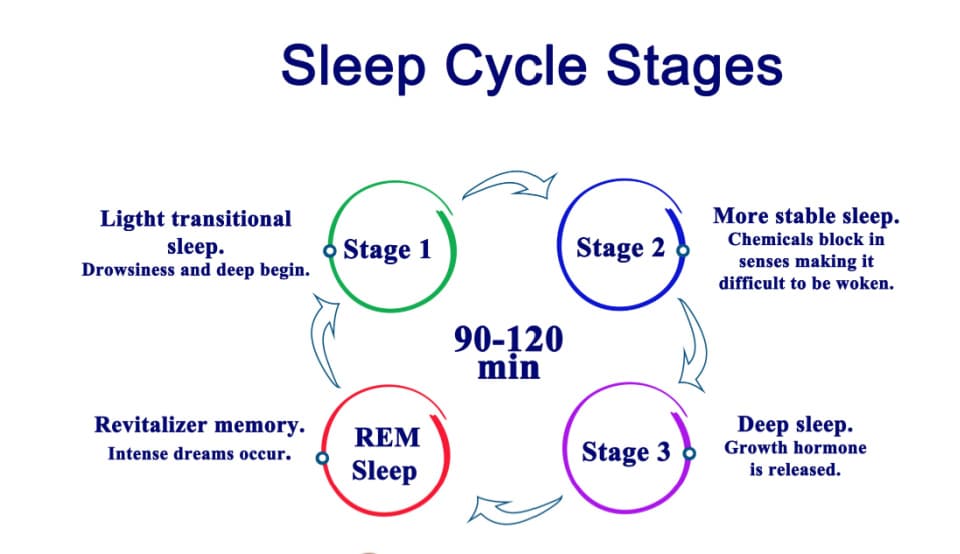
Stage 1: Falling Asleep
This stage marks the transition from wakefulness to sleep. It usually lasts only a few minutes. Heart rate and breathing begin to slow, and muscles start to relax. Some people experience brief muscle twitches or the sensation of falling during this stage.
Stage 2: Light Sleep
During this stage, the body continues to relax. Heart rate slows further, breathing becomes steady, and body temperature drops slightly. Brain activity begins to change as the body prepares to enter deeper sleep.
Although it is still considered light sleep, Stage 2 makes up a significant portion of the night.
Stage 3: Deep Sleep
This stage is the most physically restorative part of sleep. During deep sleep, the body focuses on repairing tissues, building bone and muscle, restoring energy, and strengthening the immune system.
It becomes more difficult to wake someone during this stage. If you’ve ever been awakened suddenly and felt disoriented or groggy for several minutes, you were likely pulled out of deep sleep.
REM Sleep
REM stands for Rapid Eye Movement, and this is the stage most closely associated with dreaming. During REM sleep, the brain becomes more active while the body temporarily relaxes most voluntary muscles.
REM sleep plays a crucial role in memory consolidation, learning, emotional regulation, and creativity.
The brain processes and organizes information from the day, transferring memories from short-term storage to longer-term storage.
The first REM period usually occurs about 90 minutes after falling asleep, and REM stages become longer as the night progresses.
Why This Matters

A healthy night of sleep isn’t just about the number of hours spent in bed. It’s also about allowing the brain and body to move through these sleep stages multiple times each night.
As we age, sleep patterns can change. Older adults often spend more time in lighter stages of sleep and less time in deep sleep, which can lead to more nighttime awakenings and feeling less rested in the morning.
Understanding how sleep works helps explain why quality sleep is so important for overall health.
Coming Next
Your brain does some of its most important work while you sleep. Next, we’ll look at how poor sleep may impact memory and increase dementia risk: The Link Between Sleep and Dementia: Why Brain Health Starts at Night.
See the full series. Sleep and Healthy Aging: What You Need to Know
Sleep Cycles Explained: What Happens in Your Brain While You Sleep
The Link Between Sleep and Dementia: Why Brain Health Starts at Night
Sleep and Heart Health: The Overlooked Risk Factor for Heart Disease
Are You Sleep Deprived? 12 Signs and Simple Ways to Sleep Better
Be Active Be Well
Ready to get moving again—safely and confidently?
Whether you’re dealing with chronic pain, recovering from an injury, or simply feeling stuck, our expert team is here to help. We offer personalized Physical Therapy, Occupational Therapy, and Speech Therapy assessments, all from the comfort of your home.
Serving the San Francisco Bay Area—including Santa Clara, San Mateo, San Francisco, and Marin Counties—we bring compassionate, evidence-based care right to your doorstep.
Let’s work together to keep your body in motion and your mind at ease. Contact us today to get started!
Joanne Bedwell, PT, is the Resident Blogger at Be Active Be Well. Based in San Francisco, she lives with her husband and two nearly grown daughters. With over 25 years of experience as a physical therapist, she provides in-home client care and teaches fitness classes both in person and online.
DISCLAIMER: This article contains information that is intended to help the readers be better informed regarding health care issues. It is presented as general advice on health care and is not intended to be a substitute for the medical advice of a licensed physician. The reader should consult with their doctor in any matters relating to his/her health.