
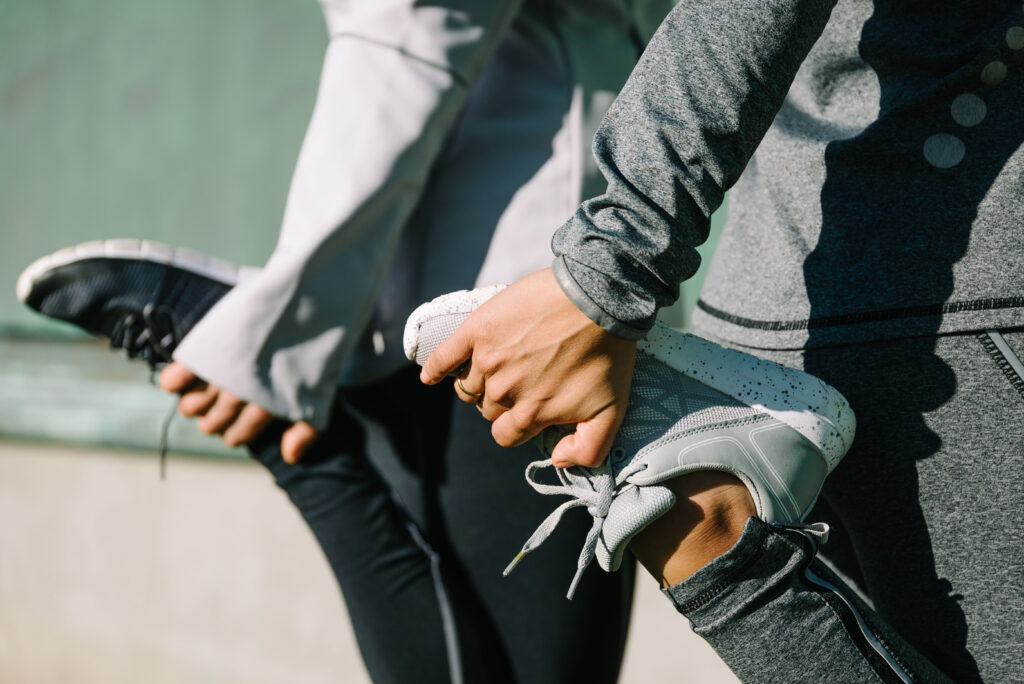
Can muscles really get longer and what is the most effective way to improve flexibility?
Many of us have found that as we age our flexibility decreases. I know this is happening to me! In this blog I will address how we can effectively maintain and improve our flexibility to better move in our lives.
It’s important to recognize that maintaining flexibility is essential for overall health and well-being, regardless of age. While muscles themselves do not necessarily get shorter with age, a combination of factors, including changes in connective tissues, muscles, joints, and lifestyle, can lead to decreased flexibility as we age. Regular physical activity, including stretching and flexibility exercises, can help counteract some of the age-related declines in mobility. Stretching routines can enhance muscle and connective tissue pliability, improve joint range of motion, promote better posture and balance, and improve our mood.

Defining a Few Terms
STRETCHING is something you DO in an attempt to elongate muscles, tendons, and connective tissues (fascia).
FLEXIBILITY is the MEASURE of the ability to move through a range of joint motion.
MOBILITY allows for FUNCTIONAL movements in daily life.
Can Muscles Get Longer?
Current evidence suggests that they can, but genetics plays a role. We are born with a certain amount of flexibility. While muscles can be “stretched” to some extent, there are limits to how much they can be elongated. There is evidence to indicate that this elongation is temporary (maybe as short as 10 minutes). For more permanent changes muscles must actually grow longer. Muscles get longer by creating more muscle fibers. They create move fibers when there is “sufficient tensile strain to elicit muscle hypertrophy.”
Keeping it simple, with regular stretching and exercise muscles can probably get longer. In addition, with regular stretching it appears that our tolerance to the discomfort associated with stretching increases allowing us to stretch farther. But to improve our overall mobility, what we are really interested in is improving the flexibility of all the soft tissue structures: muscle, tendon, ligament, and fascia.
Understanding the Anatomy
To answer the question of whether we can improve our flexibility, it is helpful to understand some basic anatomy:
MUSCLES are composed of fibers of contractile cells that are bundled together.
TENDONS connect muscles to bones. They are a cord of strong, flexible tissue.
LIGAMENTS connect bone to bone and are made of connective tissue.
FASCIA are sheets of connective tissue that form interconnecting planes spanning the entire body, surrounding and separating muscles. The motion between the fascia layers is a significant component of musculoskeletal mobility. When two adjacent layers become adherent, either due to scarring after an injury, or due to posture habits, some of the interfacial mobility is lost
Consider that when we stretch, we are not just stretching muscles but all of these structures.

Safe and Effective Stretching
Studies indicate that to gain flexibility more is better. Meaning, hold stretches longer, for more repetitions, over longer periods of time. Greater benefits were associated with a higher number of repetitions per exercise and a longer time under stretching per session as well as a longer total time under stretching.
- Hold stretches for at least 60 seconds, more likely 90 seconds.
- Perform multiple repetitions of each stretch.
- Don’t expect to see significant flexibility gains for at least 3-4 weeks of regular stretching.
- You must keep it up to maintain the gains.
Stretching Techniques
PASSIVE: In passive stretching you use a partner or prop (strap, wall, etc) to maintain the stretch for you as you relax and allow the stretch to deepen.

ACTIVE: In active stretching you contract the agonist muscle as a way to stretch an opposing muscle (the antagonist), with no external force. For example, I use my hamstring muscles to bend my knee thus stretching my quadriceps muscles. Recent studies have found this technique less effective than passive stretching teniques.
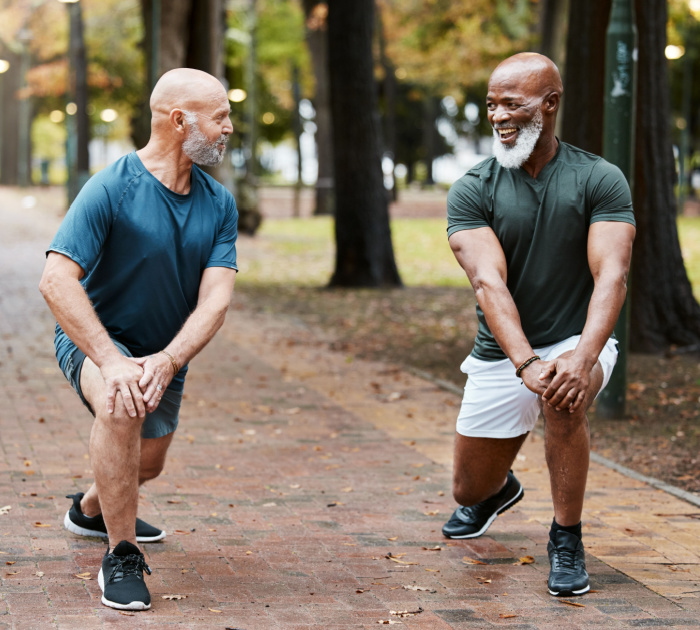
HOLD-RELAX and CONTRACT-RELAX: Hold and contract relax are PNF techniques. Both use isometric contractions to facilitate deeper stretching.
OSCILLATION TECHNIQUES: While, you do not want to bounce ballistically when stretching, there is evidence to suggest that minute oscillations may enhance the effectiveness of stretching.
FOAM ROLLERS: There is evidence to suggest that the use of foam rollers improves joint range of motion and flexibility. Through the mechanism is not fully understood yet.

To Achieve the Greatest Benefit
1. Perform active warm up/active stretching for 5 to 10 minutes to warm up your tissues and get your blood flowing! The length of the active warm up will depend on the intensity and range of motion needed for the target activity. If the target activity requires end ranges of your motion (running hurdles) you will need a longer warm up and active stretching session.
- Examples of active warm up: walking, light jog, bicycle, marching in place.
- Examples of active stretching: butt kicks, walking lunges, high knee marching, arm circles.
2. Perform the activity – Next you walk, run, cycle, jump, or participate in your group exercise class. Whatever your preferred activity is, in using your muscles in elongated positions, you are encouraging the building of those additional muscle fibers which increase muscle length.
3. If want to gain long term increases in flexibility this is the time to do additional stretching. Stretch while you cool down. Hold each stretch for a minimum of 60 seconds and repeat several times. Studies vary greatly in the duration and frequency of each stretching session from as little as 10 minutes daily to 40 minutes 3 times per week. Suffice to say, focus on your area(s) of greatest need and whereas more is better, something is better than nothing!
Be Patient and Safe

Remember that while you can improve muscle flexibility, there are natural limits to how far each muscle can stretch due to your anatomy and genetics. Listen to your body, and don’t push it beyond its limits. Avoid forcing a stretch beyond your comfort level. You should feel a gentle pull maybe even an “intense” sensation. But not pain. Over-stretching can lead to injury. Progress in flexibility may be slow, but consistency is key.
REFERENCES
Did you find this topic interesting? Below are more in depth articles:
How Stretching Actually Changes Your Muscles by Malachy McHugh -TEDEd
5 Foam Rolling Exercises for Skeptics – The New York Times, 2022
PNF Stretching: A How-To Guide – Healthline.com
The Best Warm-Up Is a Dynamic Warm-Up – The New York Times, 2023
Your Muscles Don’t Stretch! They Literally Grow Longer!– PerformanceRevolution.com
The Simple Act of Stretching – Center for Healthy Aging, Colorado State University, 2021
Joanne Bedwell, PT is the Resident Blogger at Be Active Be Well. She lives and works in San Francisco with her husband and two (almost) grown daughters. Having over 25 years of experience as a PT, she sees clients in their homes and teaches fitness classes in person and virtually.
DISCLAIMER: This article contains information that is intended to help the readers be better informed regarding exercise and health care. It is presented as general advice on health care. Always consult your doctor for your individual needs. Before beginning any new exercise program it is recommended that you seek medical advice from your personal physician. This article is not intended to be a substitute for the medical advice of a licensed physician. The reader should consult with their doctor in any matters relating to his/her health.
We provide in-home assessments in the San Francisco Bay Area. Contact us for a personalized Physical Therapy, Occupational Therapy, or Speech Therapy assessment.