
I’ve heard this argument over and over that being “poor” or on a tight budget means you have to settle for ramen noodles, mac n cheese, and other processed foods that we label “cheap”. That is simply not true. The cost of those products may seem low at the time, but they are single meal options that add up over time. The impact they could have on your health long term will eventually result in higher healthcare costs. They actually aren’t actually as “cheap” as we argue them to be.
10.5% of U.S. households are food-insecure, and 1 in 5 food-insecure households include an older adult (aged 65 or older). Proper nutrition means getting enough protein, fiber, healthy carbs and fats, vitamins, minerals and drinking enough water. For people with low income or a fixed income, maintaining a healthy diet can feel out of reach. It doesn’t have to be though. There are many affordable and healthy food options in the grocery store. You just need to know what you are looking for.
Shopping tips if you are trying to stick to a budget: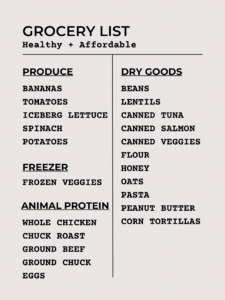
- Look for weekly specials and coupons. Many grocery stores offer loyalty programs or apps that can add up to big savings over time.
- Consider buying dry, canned or frozen products. Dry beans are cheaper than canned. Low sodium canned vegetables are cheaper than fresh, and can be just as nutritious. Check the labels to find the ones with the fewest additives.
- Browse the middle aisles. Stores often have products on end caps or displays that grab your attention but aren’t necessarily the best value.
Beans are one example of an affordable and nutritious food. They are packed with protein and fiber, and they are a suitable replacement for animal protein if you prefer a plant-based diet or can’t afford meat. A can of beans is 2-3 servings and costs $0.75-$1.50 depending on the brand and variety. And there are tons of options: Pintos, lentils, chickpeas, black beans, navy beans, kidney beans, etc. Dry beans in many varieties sell for around $1 per pound. A pound of dry beans equals about 6 cups cooked. A serving size is about ½ a cup, so for $1 or so, you can make 10-12 servings of protein-rich beans.
Bananas are another great example of an affordable food option. In California, they are almost always in season and can cost as little as $0.20 each. Bananas are rich in potassium and fiber. Enjoy one sliced on toast for breakfast, alone as a snack, or add one to a smoothie for a sweet (and healthy!) treat. Foods like canned tuna or salmon are also high protein options. Choose tuna in water (not in oil) for the healthiest choice. Canned tuna and salmon can be added into pasta sauces, spread in sandwiches and tossed into a green salad to make it a meal. Brown rice, eggs, whole grain pasta, corn tortillas, canned tomatoes, oats, and more are also low cost, nutrient rich foods to add to your grocery list. You can have a nutrient-dense and delicious diet on a fixed income or low budget.
____________________________________________________________
Government funded programs like SNAP actually allow you to choose which foods you want at your own discretion, and that includes fruits and vegetables. Restrictions tend to be on non-food items and fast food. SNAP benefits are typically a cash amount loaded onto a debit card that can be used at many grocery stores. Benefits are based on income or disability, and older adults may be eligible. It’s free to apply, and confidential.
____________________________________________________________
–Bethany Sellai is the Resident Blogger at Be Active Be Well. She lives well with her husband, three sons and one very lazy Shih Tzu, in the Central Valley where she creates social media & blog content from her little craftsman bungalow.
DISCLAIMER: This article contains information that is intended to help the readers be better informed regarding exercise and health care. It is presented as general advice on health care. Always consult your doctor for your individual needs. Before beginning any new exercise program it is recommended that you seek medical advice from your personal physician. This article is not intended to be a substitute for the medical advice of a licensed physician. The reader should consult with their doctor in any matters relating to his/her health.