Know the Signs, Take Action
Many people, myself included, avoid drinking water to limit bathroom trips. When I’m out and about, I worry I won’t find a clean restroom, I don’t want to inconvenience my travel companions, or I simply don’t want to interrupt a fun activity. But skipping hydration, especially during hot summer months, can have serious consequences. Dehydration doesn’t just leave you feeling tired or lightheaded; it can set the stage for heat exhaustion or even heat stroke.
Heat Exhaustion vs Heat Stroke
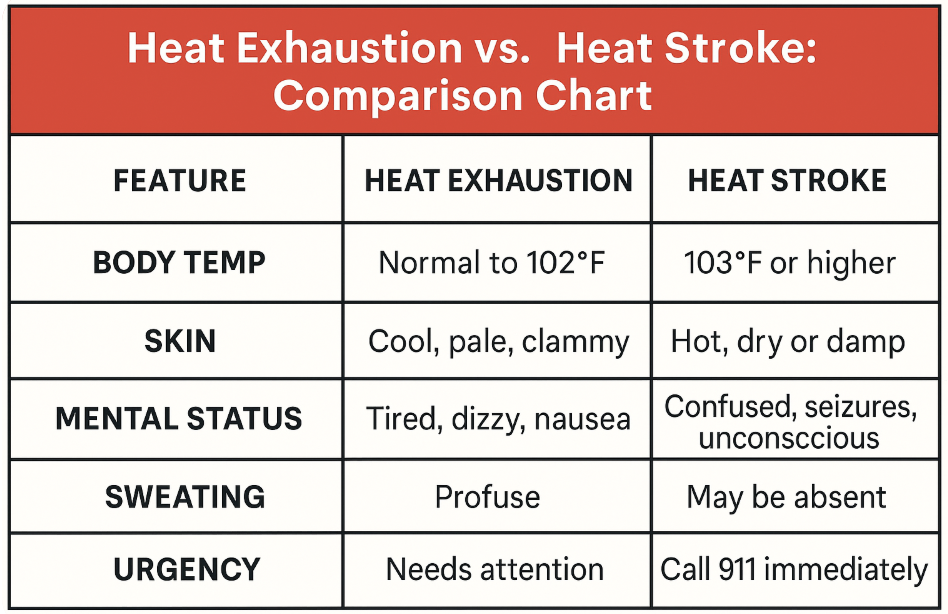
Heat illness occurs when the body loses too much salt and water through sweating. Both heat exhaustion and heat stroke are heat related illnesses requiring immediate medical attention but heat stroke is significantly more serious.
Heat Exhaustion
With heat exhaustion the body is overheating but can still regulate temperature. If left untreated, it becomes heat stroke.
Heat Stroke
With heat stroke, the body can no longer regulate the temperature.
What Is Heat Exhaustion?
The body is overheating but still able to regulate temperature. This condition usually develops gradually.
Key Symptoms:
- Heavy sweating
- Cold, pale, clammy skin
- Weakness, dizziness
- Nausea or vomiting
- Headache
- Muscle cramps
- Fast, weak pulse
First Aide:
- Move to a cooler, shaded place.
- Loosen clothing.
- Apply cool, wet cloths or use a fan.
- Offer sips of water or electrolyte drinks.
- Rest.
- If symptoms worsen or last more than an hour seek medical help.
What Is Heat Stroke?
The body temperature rises rapidly and can no longer cool itself. This condition can occur suddenly and progress quickly.
Heat Stroke is a medical emergency!
Call 911 immediately
Key Symptoms:
- High body temperature (103°F or higher)
- Hot, red, dry or damp skin
- Confusion, slurred speech, agitation
- Seizures
- Unconsciousness
- Rapid, strong pulse
First Aide:
- Call 911 immediately.
- Move person to a cooler place.
- Try to lower body temperature with cool cloths, bath, or ice packs on neck/groin/armpits.
- Do not give fluids if the person is unconscious or confused.
- Stay with the person until help arrives.
Rhabdomyolysis (Rhabdo)
A Heat + Exercise Danger
While heat exhaustion and heat stroke can happen even at rest, there’s another serious condition triggered by intense physical exertion in hot environments: rhabdomyolysis, or “Rhabdo” for short.
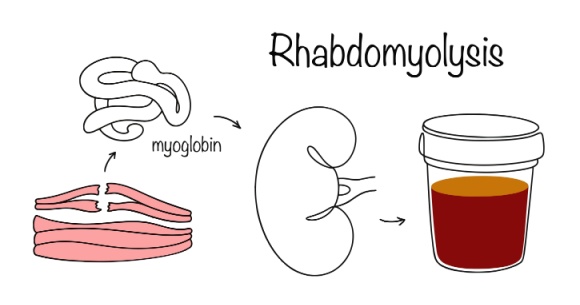
Rhabdo occurs when muscle tissue breaks down rapidly, releasing proteins and electrolytes into the bloodstream. These substances can overwhelm the kidneys, cause dangerous heart rhythms, and even lead to kidney failure.
Key Symptoms:
- Severe muscle pain or cramps
- Weakness or difficulty moving
- Tea or cola colored urine
- Unusual fatigue or exercise intolerance
First Aid:
- Stop all physical activity immediately
- Begin rehydration (water or electrolyte drinks)
- Seek immediate medical care, this is a medical emergency
If you suspect rhabdo, don’t delay care.
Early treatment is critical to avoid long-term damage.
Heat Illness Prevention Tips
Stay Hydrated
Drink water regularly, even if not thirsty.
Dress Smart
Choose light-colored, loose-fitting clothing; hats and sunglasses.
Time It Right
Avoid outdoor activity during peak heat hours (10 a.m.–4 p.m.).
Use Fans or AC
Keep living areas cool or visit cooling centers.
Check on Vulnerable Individuals
Older adults, infants, and those with chronic illness are particularly susceptible to heat illness.
Know Your Limits
Listen to your body during exercise or outdoor work.
Stay Cool, Stay Safe
As temperatures rise, so does the risk of heat-related illness. Whether you’re out for a walk, working in the yard, or exercising outdoors, it’s important to recognize the early signs of heat exhaustion, heat stroke, and rhabdomyolysis—and to take them seriously. Hydration, rest, and smart planning can prevent emergencies. Most importantly, listen to your body and don’t push through symptoms. When it comes to heat, prevention really is the best medicine.
RESOURCES
Interested in learning more? Explore these in-depth articles for deeper insights.
- California Office of Emergency Services Cooling Centers listing by county.
- Pouring Over Hydration – Be Active Be Well blog post: Learn how much water you really need, when to drink it, and what counts toward hydration. Avoid myths, stay balanced, and sip smarter every day.
- Heat-related Illnesses – CDC: Outdoor and indoor workers exposed to extreme heat or work in hot environments may be at risk for experiencing heat related illnesses. Heat-related illnesses include heat stroke, heat exhaustion, rhabdomyolysis, heat syncope, heat cramps, and heat rash.
Ready to get moving again—safely and confidently?
Whether you’re dealing with chronic pain, recovering from an injury, or simply feeling stuck, our expert team is here to help. We offer personalized Physical Therapy, Occupational Therapy, and Speech Therapy assessments, all from the comfort of your home. Contact us today to get started!
Serving the San Francisco Bay Area—including Santa Clara, San Mateo, San Francisco, and Marin Counties—we bring compassionate, evidence-based care right to your doorstep.
Joanne Bedwell, PT, is the Resident Blogger at Be Active Be Well. Based in San Francisco, she lives with her husband and two nearly grown daughters. With over 25 years of experience as a physical therapist, she provides in-home client care and teaches fitness classes both in person and online.
DISCLAIMER: This article contains information that is intended to help the readers be better informed regarding health care issues. It is presented as general advice on health care and is not intended to be a substitute for the medical advice of a licensed physician. The reader should consult with their doctor in any matters relating to his/her health.