A Practical Guide to Hydration
Water bottles have become a daily accessory. When I was growing up, no one carried one unless they were backpacking. Now, my daughters won’t leave the house without theirs. But how much water do we really need to be healthy—and are we overdoing it?
How much water do we really need to be healthy?
Despite its lack of scientific basis the idea of drinking 8 glasses of water a day comes from a 1945 recommendation by the Food and Nutrition Board that has since been popularized through media, health articles, and wellness campaigns. In reality, fluid needs depend on many factors, not just a magic number.
Current science says that total daily water intake per day (from fluids as well as food) should be 90 to 125 ounces. But there is not a one size fits all answer to this question. Fluid needs are largely dependent on body weight and how much you sweat. People who are larger, physically active, or live in hot climates need more water to be adequately hydrated.
½ oz Per Pound Daily
A good rule of thumb is to drink about 0.5 ounce per pound. If I weigh 150 pounds, I should drink at least 75 ounces of fluid per day. Combine that with the water content of the foods I eat, and I should intake enough total water. If I am going to be physically active enough to sweat, I need to intake an additional 12 ounces per 30 minutes of activity. If it’s a hot day, I need to drink more as well.
So if I weigh 150 pounds and will go on a 1 hour hike today, I should plan to drink a total of 99 ounces of water over the course of the day.
Example:
150lbs x 0.5oz – = 75oz Baseline
+ 24oz (for 1 hour of exercise)
= 99oz total for the day
If it is an exceptionally hot day, I should drink even more regardless of if I exercise or not. Using this nifty water intake calculator yields a similar result of 93 ounces.
Caffeine and Alcohol
Can I include caffeinated beverages in my daily fluid count? YES, IN MOST CASES
The notion that caffeinated beverages are dehydrating is somewhat of a misconception. While caffeine can increase urine production, this effect is generally mild and temporary.
Can I include alcoholic beverages in my daily fluid count? NO

Alcohol does promote urine production and can interfere with the ability of the body to regulate water balance. But you already knew that from waking up so very thirsty after a night of partaking in your favorite alcoholic beverage.
When to drink fluids?
A big glass of water is always a good idea first thing in the morning. Since most have not had any water all night we wake up dehydrated. If you tend to need to use the bathroom in the middle of the night, get your ounces in during the day and avoid significant fluid intake after dinner.
In the Morning: Drink a big glass of water right after waking—your body is dehydrated from the night.
Hydration Guidelines for Strenuous Exercise
To stay properly hydrated during intense physical activity, follow these general recommendations:
- 16–24oz about 2 hours before
- 8oz 5–10 minutes before
- 8oz every 20 minutes during
Can I use thirst as my guide?
No! Once you are thirsty, you are already slightly dehydrated. Further, research indicates that people over 60 are not good at detecting thirst. The level of dehydration that would make you thirsty at age 40 may not make you thirsty at age 80.
Signs of chronic dehydration
- Feeling constantly cold
- Dry skin
- Headaches
- Dry eyes
- Constipation
- Muscle cramps
How do I really know if I am adequately hydrated?
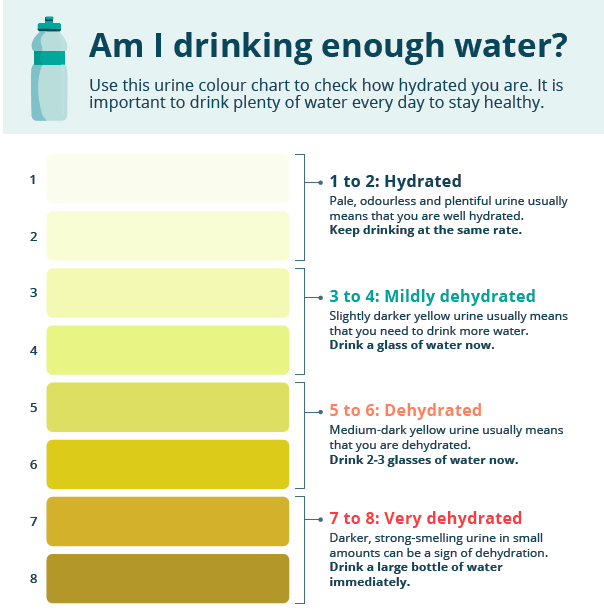
If you need to use the bathroom every 2-3 hours (6-7 times per day) then you are probably adequately hydrated. If you want to be more specific? Monitor your urine with this urine color chart. Urine should be colorless or a very pale yellow.
How much is too much?
I see people walking around with gallon size bottles of water. But other than really strong arms, there is no health benefit to guzzling water in excess of good hydration guidelines. It’s not going to magically melt your fat away or flush toxins out of your body. In fact, drinking excessive amounts of water, a condition known as water intoxication or hyponatremia, can lead to an imbalance of electrolytes in your body. The Centers for Disease Control and Prevention advises not to drink more than 48 ounces of water per hour.
Mild symptoms of water intoxication may include nausea, vomiting, headaches, and confusion.
In severe cases, it can lead to seizures, coma, and even death.
Remember, hydration is about balance, not extremes. Drink wisely, not obsessively. Track your intake for a day or two and see how you measure up!
Cheers! Be Active Be Well and go treat yourself to a refreshing glass of water.
Ready to get moving again—safely and confidently?
Whether you’re dealing with chronic pain, recovering from an injury, or simply feeling stuck, our expert team is here to help. We offer personalized Physical Therapy, Occupational Therapy, and Speech Therapy assessments, all from the comfort of your home.
Serving the San Francisco Bay Area—including Santa Clara, San Mateo, San Francisco, and Marin Counties—we bring compassionate, evidence-based care right to your doorstep. Contact us today to get started!
RESOURCES
Interested in learning more? Explore these in-depth articles for deeper insights.
- The Truth About Hydration: 7 Myths and Facts – The National Council on Aging
- How Much Water Do I Need to Drink? – New York Times
- How Much Water Should You Drink in a Day? – US News
- Report Sets Dietary Intake Levels for Water, Salt, and Potassium To Maintain Health and Reduce Chronic Disease Risk – National Academies: Science, Engineering, Medicine
Joanne Bedwell, PT, is the Resident Blogger at Be Active Be Well. Based in San Francisco, she lives with her husband and two nearly grown daughters. With over 25 years of experience as a physical therapist, she provides in-home client care and teaches fitness classes both in person and online.
DISCLAIMER: This article contains information that is intended to help the readers be better informed regarding health care issues. It is presented as general advice on health care and is not intended to be a substitute for the medical advice of a licensed physician. The reader should consult with their doctor in any matters relating to his/her health.