
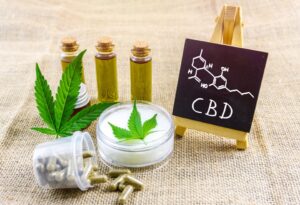
The ever growing variety of CBD products and health benefit claims are daunting to decipher. This installment details information and resources so that you, in conjunction with your doctor, can decide if a CBD product is something you want to try.
What is CBD?
From the Arthritis Foundation, CBD is short for cannabidiol. It is just one of the active compounds found in the cannabis plant. The CBD in most products is extracted from the hemp plant, a variety of cannabis, rather than the marijuana plant. It will not make you “high.” Legally it can contain no more than 0.3% THC which is the active compound that makes people “high.”
Are CBD Products Legal?
As of October 2021, all CBD products are legal in California whether derived from the hemp plant or the marijuana plant. But this is not the case in all states and marijuana derived CBD products remain illegal federally. Check your state’s laws and those of anywhere you travel if you plan to use a CBD product.
Are CBD Products Safe?
Limited Research:
Research on CBD safety is underway but currently limited. Though many medical sources, such as the Mayo Clinic, report that it is generally well-tolerated with only mild side effects. These side effects may include: dry mouth, diarrhea, reduced appetite, drowsiness and fatigue. But, more important to consider, is that CBD is thought to have the potential to interact with some commonly taken medications. So we can’t say it enough, check with your doctor if you are considering trying a CBD product.
Not FDA Regulated:
Also consider that currently, the only CBD product approved by the Food and Drug Administration is a prescription oil called Epidiolex which is for the treatment of epilepsy. Since all other CBD products are not FDA approved, they are not regulated for purity or dosage. For example, a 2017 Penn State study found that 70% of the products tested were mislabeled; some with more CBD, some with less CBD, and some with THC. See the below section on what to look for when purchasing a CBD product.
What Are The Claims?
The claims of CBD benefits are as broad as one’s imagination. They range from general wellness to calming your anxious pet. While research data supporting CBD’s benefits is still limited, it is currently being studied as a treatment for a wide range of medical conditions including: pain, sleep disorders, Parkinson’s disease, diabetes, multiple sclerosis, anxiety, and more.
Use Considerations
“I’ve talked to my doctor and I’m ready to give it a try.”
What form should I use?
CBD products come in many forms: tinctures, capsules, topicals, edibles, bath bombs, patches, dog treats, etc. There are pros and cons to each form.
- Taken Orally – swallowing (capsules, edibles, or liquid): CBD that is swallowed is absorbed through the digestive tract. Absorption is slow and dosing is tricky due to the delayed onset of effect. For example, the effects of stomach acids and recent meals are unknown. Like any medicine, edibles especially should be secured out of sight and reach of children.
- Taken Orally – sublingually: The taste may not be pleasant but the effects will be felt more quickly.
- On the skin (lotions or balms): Topical products can be applied to the skin over a painful joint. Topical products may also include common over-the-counter ingredients such as menthol, capsaicin, or camphor, making it difficult to determine if a positive effect is due to the CBD or another ingredient.
- Inhaled: CBD can be inhaled via a vaporizing, or vape, pen. However, inhalation of vapor oils and chemical byproducts carry unknown risks.
How much CBD should I use?
Because of the lack of research data there are no established clinical guidelines. It is very important to discuss the starting dose and dose range with your doctor, but the experts generally agree on “starting low and going slow.” If you experience any unwanted side effects inform your doctor immediately.
What to Look for When Shopping?
Be a cautious shopper. As stated above, CBD products are unregulated in the U.S. market. The biggest issues are strength of CBD (significantly more or less than the label says), the presence of undeclared THC, and contamination with pesticides, metals and solvents. The Arthritis Foundation has some excellent advice about what to look for:
-
- Find products manufactured in the U.S. with ingredients grown domestically.
- Choose products made by companies that follow good manufacturing practices established by the FDA for pharmaceuticals or required by the state where they are manufactured.
- Buy from companies that test each batch and provide a certificate of analysis from an independent lab that uses validated standardized testing methods approved by the American Herbal Pharmacopoeia (AHP), the U.S. Pharmacopeia (USP), or the Association of Official Agricultural Chemists (AOAC).
- Avoid companies that claim their products cure disease.
- Be aware that marketers and people behind retail counters are not health professionals; they are salespeople. That’s why your doctor is your best source for guidance and monitoring when using an unregulated product.
Joanne Bedwell, PT is the Resident Blogger at Be Active Be Well. She lives and works in San Francisco with her husband and two (almost) grown daughters. Having over 25 years of experience as a PT, she sees clients in their homes and teaches fitness classes in person and virtually.
DISCLAIMER: This article contains information that is intended to help the readers be better informed regarding exercise and health care. It is presented as general advice on health care. This article is not intended to be a substitute for the medical advice of a licensed physician. Always consult your doctor for your individual needs.
We provide in-home assessments in the San Francisco Bay Area. Contact us for a personalized Physical Therapy, Occupational Therapy, or Speech Therapy assessment.