
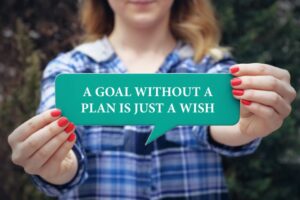
The coming new year brings a sense of renewal and the urge to make New Year’s Resolutions. However, you might be more like me—I swore years ago never to make another resolution because, well, I don’t keep them! How many people do you know who actually keep their New Year’s Resolutions? There is hope though, whereas I am terrible at keeping New Year’s Resolutions, I’m actually really good at goal setting and achieving goals.
Why Do We Fail?
There are as many reasons as there are people, but some common reasons I’ve found are:
January 1st may not be the best day to start working on a goal.
The rush of New Year’s resolutions can sometimes lead us to dive into goals without fully considering what’s involved. Before you rush in, take a moment to think it through. Have you considered the pros and cons of making this change? It’s important to weigh both the benefits and potential sacrifices before committing. For example, if your goal is to hit the gym every day, have you thought about what that will require? What might you need to adjust in your schedule, like cutting back on family time or other hobbies, to make it work?
We often make goals that are either too vague or too specific.
For example, the most common New Year’s Resolution is to exercise (NOT SPECIFIC ENOUGH); when, where, how much, what type, etc. The second most common resolution is to achieve a specific body weight (TOO SPECIFIC); focus on the actions needed instead of the number on the scale.
Turning Health Into A Habit
Making health habitual: the psychology of habit-forming
I have found the information in this paper so very helpful over the years in helping my clients make lasting changes. When something becomes a habit, it becomes automatic, requiring little thought or effort. For example, I’m certain that I don’t think about putting my seat belt on when I get in the car. It’s a habit, I just do it.
According to this study, with a few simple rules, in about 10 weeks we can create a habit of our choosing! The habit must be a new behavior (I will eat a vegetable with lunch). We can’t form a habit of avoiding something (e.g., ‘I won’t eat candy’).
Strategies For Success
I have a few more personal insights to share on this subject. As a physical therapist with 25 years of experience, I have a lot of firsthand knowledge from helping people set and meet their own health goals.
Contact us for a personalized Physical Therapy, Occupational Therapy, or Speech Therapy assessment. We provide in-home consultations in the San Francisco Bay Area: Santa Clara, San Mateo, San Francisco, and Marin Counties.
You First!
What is important to YOU? If the goal is important to you, there is a much better chance you will achieve it.
Small Changes = Big Results!
Choose a small, manageable goal that you can realistically achieve. Failure is discouraging and will allow you to give up. You can build on the small successes over time. Success will stimulate further changes. Remember, it’s a marathon, not a sprint. Simpler actions become habitual more quickly.
Be Specific!
- What? (5 squats)
- When? (while my coffee brews)
- Where? (in the kitchen)
Schedule It!
Treat it like an appointment with yourself: write it down, add it to your calendar, and reschedule when necessary—but try not to cancel.
Share It!
Tell your friends and family about your goal and enlist their support. I know when I am ready to commit to working on a goal because I am ready to tell others and be accountable.
Stay Flexible!
Know that challenges and setbacks will happen; don’t judge yourself, dust yourself off and get right back on track.
Congratulations!
You’ve made a healthy habit!
It will get easier with time and in about 10 weeks you should find you are doing your target action automatically without having to think about it.
Be Active Be Well —Start Your Healthy Habit Today!
We provide in-home assessments in the San Francisco Bay Area. Contact us for a personalized Physical Therapy, Occupational Therapy, or Speech Therapy assessment.
Joanne Bedwell, PT is the Resident Blogger at Be Active Be Well. She lives and works in San Francisco seeing clients in their homes and teaching fitness classes.
DISCLAIMER: This article contains information that is intended to help the readers be better informed regarding exercise and health care. It is presented as general advice on health care. Always consult your doctor for your individual needs. Before beginning any new exercise program it is recommended that you seek medical advice from your personal physician. This article is not intended to be a substitute for the medical advice of a licensed physician. The reader should consult with their doctor in any matters relating to his/her health.