Sunscreen isn’t just for beach days. It’s your everyday defense against skin damage and cancer.
My husband and I have had a long-running debate about whether sunscreen is necessary on road trips. He always insisted it was, while I couldn’t believe that auto glass didn’t block UV rays. Turns out, he was right. Not only does UVA light penetrate car windows, but I’ve also recently learned that airplanes don’t block all UV rays either. So yes, sunscreen on a plane is a smart move. Read on to learn more ways to protect your skin beyond the beach.
Choosing the right SPF, applying it correctly, and combining it with other smart sun habits can help you stay safe and radiant all year long.
Why SPF Deserves Your Attention
SPF stands for Sun Protection Factor, and it refers to the level of protection a sunscreen offers against UVB rays—the type responsible for sunburn and a major contributor to skin cancer. Here’s what those numbers really mean:
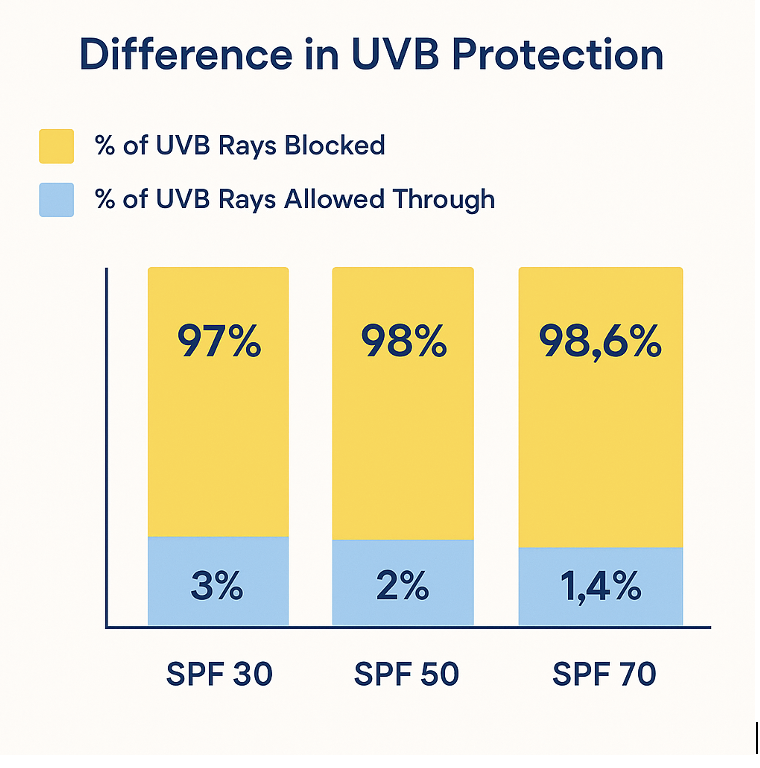
- SPF 30 allows about 3% of UVB rays to reach your skin.
- SPF 50 allows about 2% through.
- SPF 70 allows about 1.4% of UVB rays to get through.
A 1% difference may sound small, but SPF 30 lets 50% more UV radiation reach your skin than SPF 50.
However, no sunscreen is perfect—and higher SPF doesn’t mean you can stay out indefinitely. In real-life use, people wearing high-SPF products may stay in the sun longer, skip reapplying, or forget to wear protective clothing. This “false sense of security” can lead to more sun damage, not less.
UVA vs. UVB: Know the Difference
- UVB rays cause sunburn and play a key role in the development of skin cancer.
- UVA rays penetrate deeper, causing tanning, skin aging, and wrinkles.
To fully protect your skin, choose a broad-spectrum sunscreen—this means it guards against both UVA and UVB rays.
While UVB radiation is generally considered more potent in causing skin cancer, especially melanoma, UVA rays are also linked to both non-melanoma skin cancers and melanoma.
When and How to Use Sunscreen
The Skin Cancer Foundation recommends using a water-resistant, broad-spectrum sunscreen with an SPF of 50 or higher for extended outdoor activity.
Apply:
- One ounce (about a shot glass full) 30 minutes before going outside.
- Reapply every 2 hours, and immediately after swimming or sweating.
Don’t forget easy-to-miss areas: tops of ears, back of the neck, scalp, hands, tops of feet, and lips.
More Ways to Protect Your Skin
While sunscreen is crucial, it’s only part of a complete sun protection strategy:
- Cover Up: Wear a wide-brimmed hat, UV-protective sunglasses, and long-sleeved, lightweight clothing (some brands even offer built-in SPF).
- Seek Shade: Especially between 10am and 4pm, when UV rays are strongest.
- Time It Right: Plan outdoor activities in the early morning or later evening to reduce direct exposure.
- Be Window-Wise: UV rays can penetrate glass. Use sunscreen even when driving or sitting near windows.
And here’s one many people overlook: you should also wear sunscreen on airplanes. At 30,000 feet, UV exposure is significantly higher, and airplane windows don’t block all of it. In fact, studies have shown that pilots and flight attendants face an increased risk of skin cancer, an eye-opener for frequent flyers.
Know Your Risk
You may be more vulnerable to UV damage if:
- Skin cancer runs in your family
- You’ve had it before (there’s a 60% chance of recurrence within 10 years)
- You’re undergoing treatments like chemotherapy that suppress the immune system
Talk to your healthcare provider about your personal risk and best prevention strategies.
Be Active Be Well—and be sun smart. 🌞

At Be Active Be Well, we provide in-home consultations in the San Francisco Bay Area: Santa Clara, San Mateo, San Francisco, and Marin Counties. Contact us for a personalized Physical Therapy, Occupational Therapy, or Speech Therapy assessment.
RESOURCES
Interested in learning more? Explore these in-depth articles for deeper insights.
- Ask the Expert: Does a High SPF Protect My Skin Better? – The Skin Cancer Foundation, Steven Q. Wang, MD
- Car Windows Won’t Protect You From UV Rays – University of Utah Health
- Assessment of Levels of Ultraviolet A Light Protection in Automobile Windshields and Side Windows – JAMA Ophthalmology | Vol. 134, No. 7 , Brian S. Boxer Wachler, MD
Joanne Bedwell, PT, is the Resident Blogger at Be Active Be Well. Based in San Francisco, she lives with her husband and two nearly grown daughters. With over 25 years of experience as a physical therapist, she provides in-home client care and teaches fitness classes both in person and online.
DISCLAIMER: This article contains information that is intended to help the readers be better informed regarding health care issues. It is presented as general advice on health care and is not intended to be a substitute for the medical advice of a licensed physician. The reader should consult with their doctor in any matters relating to his/her health.