
Nordic walking poles have gained popularity as versatile mobility aids and are frequently chosen over traditional canes, forearm crutches, and walkers.
Here’s what you need to know to make the best choice for your mobility needs.
Traditionally, canes and walkers have provided essential support and balance for individuals with mobility challenges. In contrast, walking poles have been used primarily for stability on uneven terrain and to enhance cardiovascular benefits during walking or hiking. However, walking poles can also be highly beneficial for those who find canes insufficient but aren’t ready for a walker. Increasingly, I recommend walking poles to clients who need more stability than a cane can offer but want to avoid the limitations of a walker. Walking poles provide greater freedom, especially for outdoor activities, allowing for better mobility and engagement in physical activities.
Canes
A cane is designed to offload weight from a limb, specifically supporting the opposite (contralateral) side. For instance, if you injure your right knee, you would hold the cane in your left hand. This helps transfer some of the weight away from your injured leg, allowing you to maintain a natural walking posture. Canes also offer balance support for those with mild balance issues, making them ideal for situations where only minimal assistance is needed. The compact size and ease of transport make canes a convenient choice for light support on the go.
There are several types of canes.
Single-Point Cane
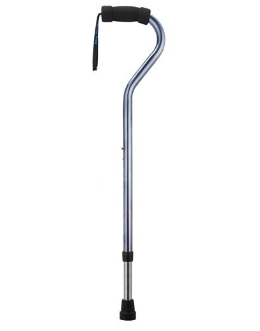
Single-point canes are the most commonly recognized type of cane. Typically made of wood or aluminum, these canes feature a single rubber tip that makes contact with the ground, providing basic support and stability.
Stand-Alone Cane
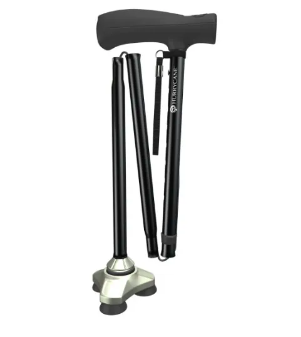
Stand-alone canes are a variation of single-point canes that feature a slightly wider, triangular-shaped base. This design allows the cane to stand upright on its own, freeing the user’s hands without the risk of the cane falling over. Many models are also foldable, making them compact and easy to stow in a bag or purse for convenience.
Quad Cane
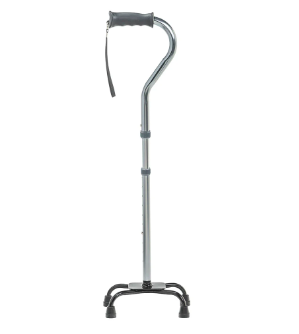
Quad Canes are designed with a broad, four-point base offering maximum stability. However, their increased weight compared to other canes can make them cumbersome and increase the risk of tripping if not used correctly. Because of these drawbacks, I rarely recommend them. For those requiring more stability than a single-point cane and who can use both arms, a walker or walking poles are often better options. Quad canes are most suitable for individuals needing moderate stability who can’t use one arm, such as those recovering from a stroke or an arm injury.
Walking Poles
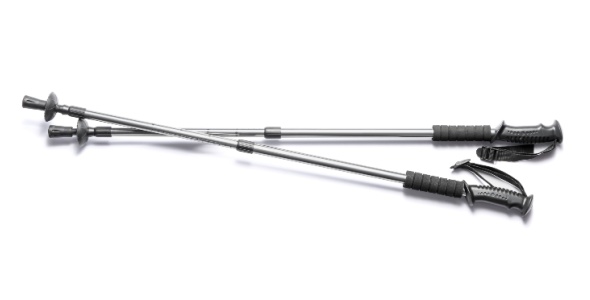
Walking poles, commonly known as Nordic or trekking poles, have traditionally been used to provide stability for hikers on uneven terrain. Usually used in pairs, they help distribute weight, absorb shocks, and reduce the impact on joints. Recently, walking poles have gained popularity beyond hiking, as research shows they enhance the upper body workout and cardiovascular benefits of walking. This makes them a valuable tool for those looking to boost both their fitness and strength during their walking routine.
Do walking poles provide benefits over canes for individuals with balance or mobility issues?
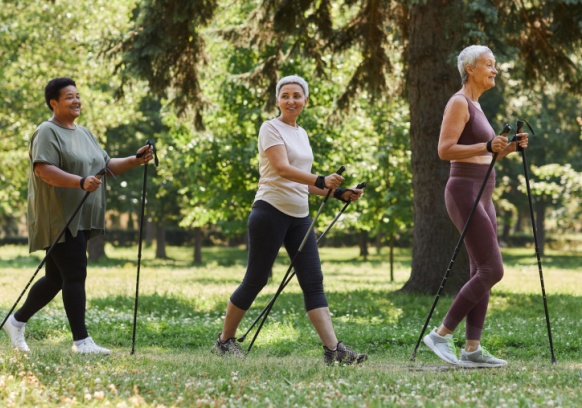
In specific scenarios, they do. Walking poles, which offer dual support, are more stable than canes. However, their larger size and inability to stand alone, can be impractical for everyday indoor use. When a cane isn’t enough support, the next step is often a walker. However, for those who function well indoors but need additional outdoor support, walking poles can be highly beneficial. They facilitate longer and more varied outdoor excursions. Additionally, walking poles are smaller and easier to transport than walkers, making them convenient for car trips and travel. Walking poles can have various types of end caps. For maximal stability and to minimize slipping, you want a rubberized tip.
The final factor to consider is endurance. If limited endurance is a significant challenge, a rolling walker with a seat might be the best option, even if stability is not an issue. The ability to sit down whenever needed can be invaluable, offering greater freedom to move around despite the bulkiness of the walker. This feature can make a rolling walker with a seat an excellent choice for those who need frequent rest breaks.
To reduce the risk of falls it is prudent to get an assessment from a physical or occupational therapist when choosing an assistive device. But it is also important to consider which of the available options will best empower you to fully engage and participate in your daily activities.
Contact us for a personalized assessment. We provide in-home assessments in the San Francisco Bay Area.
Joanne Bedwell, PT is the Resident Blogger at Be Active Be Well. She lives and works in San Francisco with her husband and two (almost) grown daughters. Having over 25 years of experience as a physical therapist, she sees clients in their homes and teaches fitness classes in person and virtually.
DISCLAIMER: This article contains information that is intended to help the readers be better informed regarding exercise and health care. It is presented as general advice on health care. Always consult your doctor for your individual needs. Before beginning any new exercise program it is recommended that you seek medical advice from your personal physician. This article is not intended to be a substitute for the medical advice of a licensed physician. The reader should consult with their doctor in any matters relating to his/her health.