

My love affair with sleep isn’t merely a preference; it’s a need that I honor diligently. My 7-8 uninterrupted hours of rest aren’t just a luxury; they’re a lifeline that keeps me grounded and focused. So as I passionately extol the virtues of a good night’s sleep, know that it’s not just enthusiasm – it’s a testament to my unwavering commitment to self-care and well-being.
Others, however, swear they need only a few hours of sleep a night; work is too busy or life is too full to prioritize sleep. Is this you? You are not alone. According to 2020 survey data from the Centers for Disease Control and Prevention, more than a third of adults in the United States don’t get the recommended seven hours or more of sleep every night.
Are there long term consequences from burning the candle at both ends?
The science says yes. Sleep is of paramount importance to overall health and well-being. It’s a fundamental physiological process that allows the body and brain to rest, repair, and recharge. Why is sleep so important, how much sleep do we need, what can we do if we don’t get enough sleep, and what is the impact of long term sleep debt? These are some of the questions I will address in this blog.
What happens when we sleep and why is sleep so important?
When we sleep, our bodies and brains undergo a complex series of physiological processes that are essential for maintaining overall health and well-being. Here’s an overview of what happens when you sleep and why sleep is so important.
90 Minute Sleep Cycle
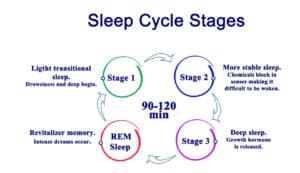
Sleep is divided into different stages, each with its own distinct characteristics and functions. Each 4 stage “sleep cycle” is about 90 minutes in length. If we don’t consistently pass through all of these 90 minute sleep cycles FOUR TO SIX every 24 hours we are at risk for a range of detrimental health effects.
The 4 Stages of Sleep
Sleep is further divided into 2 categories: Non-REM sleep (Stages 1-3), provides physical restoration, energy conservation, and immune system support. REM sleep (Stage 4) is essential for cognitive functions, memory processing, and emotional regulation.
Stage 1: Non-REM
This “dozing off” phase between wakefulness and sleep lasts about 10 minutes. It’s a light sleep stage where muscle activity decreases, and the heart rate and breathing slow down.
Stage 2: Non-REM
This phase of light sleep prepares us to enter into deep sleep and may last up to 25 minutes. During this time our muscles further relax and heart rate and breathing continue to slow. Body temperature drops, eye movements stop, and brain waves slow becoming more rhythmic.
Stage 3: Non-REM
During this phase of sleep which may last 20-40 minutes, our eyes and muscles fully relax allowing our bodies to do the important work of repairing and building bone, muscle and other tissues, as well as strengthening the immune system and consolidating and processing memories. It is increasingly difficult to be woken during this stage. If woken you may experience a period of disorientation and brain fog for up to 30 minutes or an hour. (Sound familiar? I know I have experienced this!)
Stage 4: REM (Rapid Eye Movement) Sleep
This stage is characterized by rapid and random eye movements, vivid dreaming, and temporary paralysis of voluntary muscles. Our breathing gets faster, and heart rate and blood pressure increase. REM sleep is crucial for cognitive functions, memory consolidation, and emotional regulation. It’s believed to play a role in learning and creativity. Usually, the first period of REM sleep occurs around 90 minutes into your sleep cycle and lasts about 10 minutes. Each of your later REM stages gets longer the more hours you remain asleep.
The Benefits of Sleep/The Cost of Sleep Deprivation
Sleep is a vital physiological process that plays a crucial role in maintaining overall health and well-being. Adequate and quality sleep is crucial for maintaining optimal health, cognitive function, emotional regulation, and overall vitality.
Poor sleep, whether due to insufficient duration, disrupted sleep cycles, or sleep disorders, can have significant negative effects on physical, mental, and emotional health. Specifically there is a growing body of research that suggests a link between poor sleep to both dementia and heart disease.
The Link Between Poor Sleep and Dementia
Prolonged sleep loss is associated with increased risk of neurodegenerative diseases such as Alzheimer’s and Parkinson’s disease.
Brain Cell Health
Sleep is important for supporting the health and function of brain cells. Sleep deprivation can lead to oxidative stress and cellular damage, which are factors implicated in the development of dementia.
Simply stated in The New York Times article The Sleep Debt Collector Is Here:
“Wakefulness in the brain, even under normal circumstances, incurs penalties,” Dr. Fernandez said. “But when you’re awake for too long, then the system gets overloaded. At some point, you can’t beat a dead horse. If you’re asking your cells to remain active for 30 percent more time each day, cells die.”
Clearing of Waste Products
Sleep is believed to play a role in clearing waste products from the brain, and its deprivation can hinder this process. One of the hallmark features of Alzheimer’s disease is the accumulation of beta-amyloid plaques in the brain. Research suggests that sleep plays a role in clearing these plaques from the brain.
Memory Consolidation
Sleep is essential for memory consolidation, a process in which the brain organizes and stores new information acquired during the day. Disrupted sleep patterns can impair this process, potentially leading to cognitive decline and memory problems associated with dementia.
Neuroinflammation
Poor sleep can trigger neuroinflammatory responses in the brain, which are associated with various neurodegenerative diseases, including dementia. Chronic inflammation can contribute to neuronal damage and cognitive decline.
The Link Between Poor Sleep and Heart Disease
Long-term sleep deprivation is linked to an increased risk of cardiovascular diseases, including hypertension (high blood pressure), heart disease, and stroke. Poor sleep can contribute to inflammation, arterial damage, and disruptions in heart rate and blood pressure regulation.
Hypertension (High Blood Pressure)
Inadequate sleep is associated with an increased risk of hypertension. Poor sleep can lead to the activation of the sympathetic nervous system, which controls the “fight or flight” response, and this can cause an increase in blood pressure. Over time, chronic high blood pressure can damage blood vessels and contribute to heart disease.
Inflammation
Poor sleep has been linked to increased levels of inflammation in the body. Chronic inflammation is a known risk factor for cardiovascular diseases. It can damage blood vessels, promote the development of atherosclerosis (narrowing and hardening of arteries), and contribute to heart attacks and strokes.
Metabolic Imbalances
Sleep deprivation can lead to disruptions in hormone regulation, including hormones that control appetite and metabolism. This can contribute to weight gain, obesity, and metabolic syndrome, all of which are risk factors for heart disease.
Impaired Glucose Regulation
Poor sleep is associated with insulin resistance and impaired glucose tolerance, which are risk factors for type 2 diabetes; a significant contributor to heart disease.
Sympathetic Nervous System Activation
Sleep deprivation activates the sympathetic nervous system, leading to increased heart rate, blood pressure, and stress hormone release. These physiological responses can strain the cardiovascular system over time.
The Benefits of Prioritizing Sleep
Longevity!
Isn’t this what we all really want? To live longer and healthier! Consistently getting sufficient and restful sleep is linked to increased longevity and a reduced risk of premature mortality.
Overall Well-Being
While we live longer, don’t we want to feel better? Sleep is a restorative process and contributes to an improved sense of well-being, greater life satisfaction, and a better quality of life. As we all know from experience, when we get a good night’s sleep we are more productive, more alert, concentrate better, and in general have a rosier outlook.
Emotional Well-Being
Quality sleep supports emotional regulation, reduces stress, and enhances resilience to emotional challenges. It decreases the risk of developing mood disorders such as anxiety and depression and helps maintain a balanced and positive mood.
Physical Restoration
Whether you are an athlete or just going through your day, physical performance is important. During sleep, the body undergoes processes that repair and regenerate tissues, muscles, and organs. Reaction time and coordination are improved with adequate sleep.
Cognitive function and Memory Enhancement
Sleep is crucial for transferring information from short-term to long-term memory storage. It improves your ability to remember and recall information. Adequate sleep enhances: attention, learning, information retention, problem-solving, decision-making, and creativity.
Immune System Boost
Sleep strengthens the immune system, making your body more effective at fighting off infections and illnesses. It promotes the production of immune cells and substances that protect against pathogens.
How Much Sleep Do We Need?
In the publication, How Much Sleep Do I Need?, the CDC has detailed sleep recommendations by age. Research supports the recommendation that adults over 18 need 7-9 hours!
The Signs and Symptoms of Sleep Deprivation?
So you think you don’t need 7-9 hours of sleep. Take a look at the list below. Sleep deprivation can manifest through a variety of physical, mental, and emotional symptoms. If you consistently experience these signs, it might indicate that you are not getting enough restful sleep. Here are some common signs of sleep deprivation:
- Struggling to stay awake when inactive such as when watching TV
- Feeling physically and mentally drained
- Difficulty concentrating
- Increased appetite or craving high calorie carbohydrate-rich foods
- Reduced coordination, clumsiness, accidents
- Mood Changes such as irritability, increased sensitivity, or heightened emotional responses
- Family members complaining that you are irritable
- Forgetfulness such as trouble remembering details, names, or information
- Loss of motivation
- Yawning constantly
- Needing multiple power naps during the day
- You’re tired all the time
Napping
The Downside of Relying on Napping
Can a Nap Make Up for a Bad Night of Sleep? A few hours of sleep at night and a nap during the day might add up to six or more hours total, but remember we need to get all the way through the 90 minute sleep cycle 4 to 6 every day. Short naps of less than 90 minutes typically only include the lighter phases of sleep, not the deep, restorative sleep that we need.
The Upside of Napping
If we don’t rely on them constantly, there are instances where short naps can be helpful. When you haven’t gotten a great night of sleep and you need to be productive, napping can help improve reaction time and memory. A 20- to 30-minute nap can restore alertness without leaving you groggy or disrupting your sleep the next night. Give a Coffee Nap a try.
HELP!
I’m sleep deprived and I don’t know what to do.
If you need help with your sleep, The Sleep Foundation website has excellent resources such as:
- Sleep Habits
- The Ultimate Sleep Improvement Plan
- Top 20 Proven Sleep Tips
- Sleep Hygiene
- Sleep Aids
- Melatonin
- Magnesium
- Sleep Tools and Products
- Sleep Calculator
- 7 Nights to Better Sleep
When we prioritize good sleep we prioritize our well-being.
Sleep is a cornerstone of health, affecting virtually every aspect of our physical, mental, and emotional well-being. When we sleep, our bodies and brain undergo a complex and essential series of physiological processes. The effects of chronic sleep loss can vary from person to person, but in general, consistent inadequate sleep has a significant negative impact on overall health and well-being. Make sleep a priority!
REFERENCES
Did you find this topic interesting? Below are some more in depth articles.
- Sleep Better at Every Age – NY Times
- Sleep: How Much You Need and Its 4 Stages – The Cleveland Clinic: When you sleep, your body rests, recovers and rebuilds itself through four stages.
- How Much Sleep Do I Need? – CDC Chart
- The Sleep Debt Collector Is Here – NY Times: Recent studies in humans and mice have shown that late nights and early mornings may cause long lasting damage to your brain.
- Can a Nap Make Up for a Bad Night of Sleep? – NY Times: Here’s what experts say about what naps can (and can’t) do for your health.
- Why Do Women Have More Sleep Issues Than Men? – NY Times
- How to Get a Better Night’s Sleep – NY Times
- Why Do I Wake Up Before My Alarm? NY Times
- Coffee Nap – The Sleep Foundation
- The Sleep Foundation
Joanne Bedwell, PT is the Resident Blogger at Be Active Be Well. She lives and works in San Francisco with her husband and two (almost) grown daughters. Having over 25 years of experience as a PT, she sees clients in their homes and teaches fitness classes in person and virtually.
DISCLAIMER: This article contains information that is intended to help the readers be better informed regarding exercise and health care. It is presented as general advice on health care. Always consult your doctor for your individual needs. If you’re experiencing chronic sleep problems, consulting a healthcare professional or sleep specialist is recommended. Before beginning any new exercise program it is recommended that you seek medical advice from your personal physician. This article is not intended to be a substitute for the medical advice of a licensed physician. The reader should consult with their doctor in any matters relating to his/her health.
We provide in-home assessments in the San Francisco Bay Area. Contact us for a personalized Physical Therapy, Occupational Therapy, or Speech Therapy assessment.