
With the end of the tax year approaching December is Car Donation Month.
There are some great reasons to donate your old car: get a tax donation (SAVE MONEY!); get that old car towed for free (SAVE MONEY!); no more insurance, registration, or maintenance costs (SAVE MONEY!); no annoying paperwork to deal with, charities will handle this for you (SAVE TIME!); support a cause (HAPPINESS ADDS YEARS TO YOUR LIFE!).
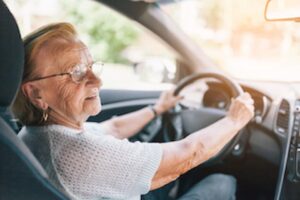
But why are we talking about this here at Be Active Be Well? Because maybe it’s time for you or someone you love to consider limiting or giving up driving.
My mother, who is 92 years old, stopped driving at about age 85. My siblings and I are eternally grateful that she made the decision on her own at the same time we started thinking we were going to have “The Talk.” If you are thinking you need to have “The Talk” with a loved one, we want to help you out.
Why Stop Driving
People aged 70 and older are more likely to crash than any other group (with the exception of drivers aged 25 and younger). Because they are more fragile, they are more likely to be seriously injured and fatal crash rates are highest for drivers over 80. But perhaps more disconcerting is that one study found that most people drive 7-10 years longer than they should!
As we age vision, hearing, reflexes, and cognitive changes all make safe driving more challenging. For example, by age 60 eyes need three times more light to see as they did at age 20 making it much more difficult to see at night. At age 57 I can see (ha ha! pun intended) this already with myself. Vision can be tested, reflex and cognitive changes can be more difficult to quantify. The cognitive skills for safe driving are a complex mix of visual perception, cognitive processing, focused attention, and management of multiple tasks. Poor reaction time and distractibility can be fatal.
To Drive Or Not To Drive
There are many resources that have lists of warning signs and issues to consider when making the decision to modify driving (i.e. stop driving at night or when raining) or stop driving entirely. I’ve listed some of the key considerations:
- Other drivers honk at you or your loved one
- Signs “fender benders” like new dents and scrapes, or close calls
- Delayed response to unexpected situations
- Becoming easily distracted, poor concentration
- Driving too slow or too fast for the conditions
- Getting lost on familiar roads
- Trouble moving into or staying in the correct lane
- Decreased confidence while driving
- Unable to hear sirens
- Unable to turn head and neck far enough to see over shoulders
Professionals and senior driving schools can help with these determinations. They even have classes to help improve skills to keep seniors driving safely as long as possible. One we can wholeheartedly recommend is The Safe Driver on the peninsula owned by Marc Samuels, MS, OTR/L, CDRS.
The Conversation
#1 Do your prep-work.
The AARP has a free seminar titled, “We Need to Talk,” to help families prepare for the conversation and discreetly prepare a list of observations and concerns.
#2 Plan for alternative transportation options.
Errands will still need to be run and appointments attended, social functions are important to keep seniors engaged and connected to their friends and communities.
#3 Approach the subject respectfully and acknowledge that this is difficult for them.
The best conversation starter I saw was from the dailycaring.com website. They suggested starting off with, “I know this must be a sensitive subject, but we need to talk about your driving.” Share some specific concerns. Emphasize that you’re not accusing them of being a bad driver. Instead focus on their health conditions or other aging-related issues that make their driving unsafe.
#4 Be understanding and give them time to accept the changes. It may take more than one conversation.
We need only imagine losing our ability to drive to know how difficult making this decision must be. Driving is a symbol of independence. In many communities it is the main way to maintain our hobbies and social activities. The other alternatives available are often inconvenient or expensive.
When All Else Fails
As a last resort there are steps you can take to ensure the safety of your loved one and the safety of those in your community.
– Have a close friend or relative “borrow” the car
– Take the car in for “repairs.” (“The mechanic says it’s too expensive to fix.”)
– Hide or “lose” the keys
– Disable the car by disconnecting the battery
– Sell the car
– And worst case, anonymously report them to the DMV. Then they will be mad at the DMV and there will be peace in the family.
We provide in-home assessments in the San Francisco Bay Area. Contact us for a personalized Physical Therapy, Occupational Therapy, or Speech Therapy assessment.
Joanne Bedwell, PT is the Resident Blogger at Be Active Be Well. She lives and works in San Francisco seeing clients in their homes and teaching fitness classes.
DISCLAIMER: This article contains information that is intended to help the readers be better informed . It is presented as general advice on health care. Always consult your doctor for your individual needs. This article is not intended to be a substitute for the medical advice of a licensed physician. The reader should consult with their doctor in any matters relating to his/her health.