
New Research Offers Helpful Nuance

In a previous blog, Step into Wellness: Unveiling the Benefits of Walking, we reviewed the well-established health benefits of walking and why even modest increases in daily steps can meaningfully improve health. That message still holds true. However, new research adds an important layer to how walking may be most beneficial; especially for people who are not yet meeting activity guidelines.
What the New Research Found
A recent study published in Annals of Internal Medicine examined how walking patterns affect health outcomes in adults who were considered “suboptimally active.” The key finding was this:
Adults who accumulated most of their daily steps in longer walking bouts had lower mortality and cardiovascular disease risk than those who accumulated the same number of steps in shorter bouts.
In practical terms, this suggests that when possible, walking for longer, more continuous periods may provide additional cardiovascular benefit compared to very fragmented activity.
What This Does Not Mean
This research does not mean that short walks “don’t count.” It also does not mean you should avoid moving unless you can walk for 20–30 minutes at a time.
Think of longer walking bouts as a bonus, not a requirement.
Decades of research still clearly show that:
- Any physical activity is better than no activity
- Short bouts of walking improve circulation, blood sugar control, joint health, mood, and overall function
- Frequent movement throughout the day remains especially important for people who sit for long periods
How to Use This Information Pragmatically
Rather than choosing between short or long walks, the most effective approach is to layer your movement:
Start where you are.
If you’re currently inactive, short walks spread throughout the day are an excellent place to begin.
Build gradually.
As your endurance improves, aim to include one longer walking session most days; even 10–15 minutes to start.
Progress intentionally.
Over time, increasing walking duration while keeping intensity moderate can support heart health and longevity.
For those who want structure, a gradual, progressive walking plan—one that considers time, frequency, and perceived exertion—can be ideal. Such a program helps translate research into real-life habits without overdoing it.
Need a simple way to put this into practice?
Our Moderate Walking Program resource provides a structured, gradual approach to building walking duration and intensity using Rate of Perceived Exertion (RPE). It’s designed to help people start safely, progress confidently, and turn research into sustainable daily habits.
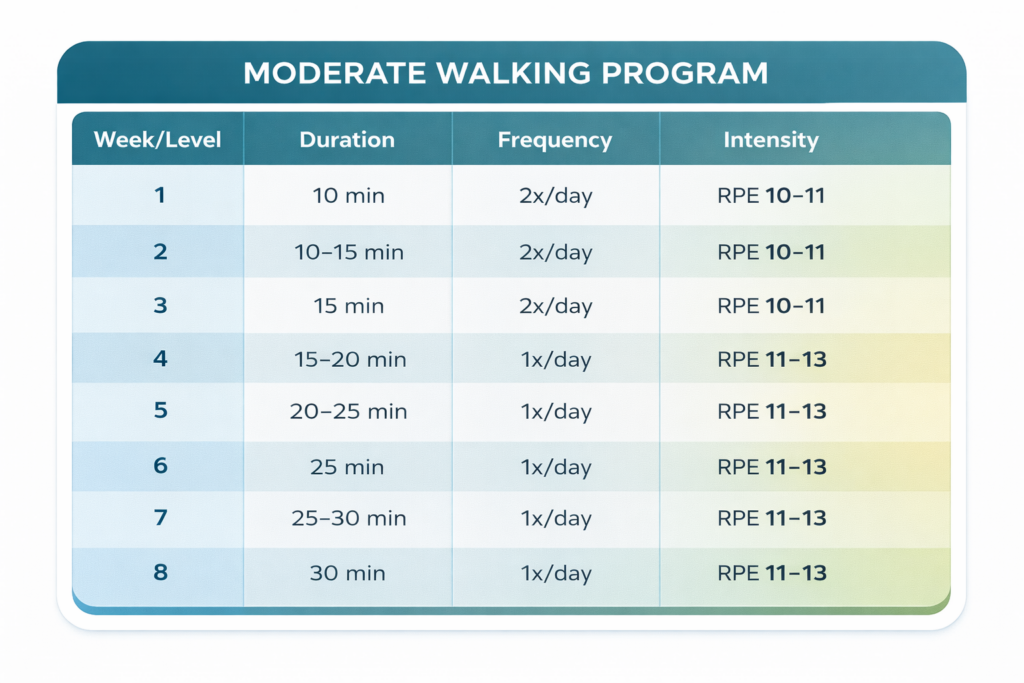
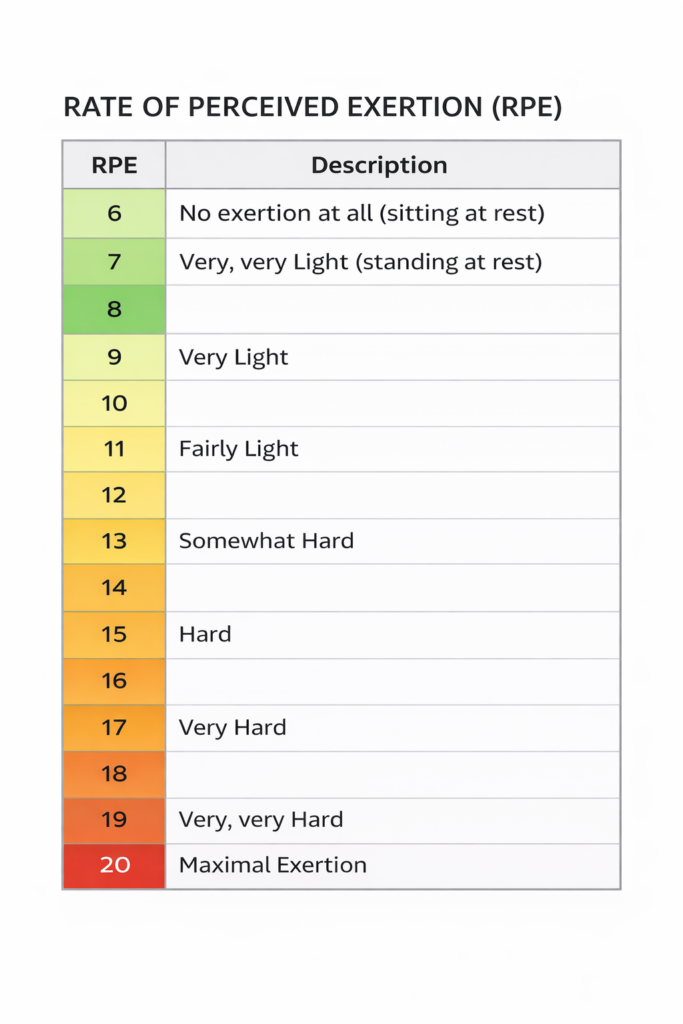
Continue to walk at least 30 minutes every day for the rest of your life. If you are able to increase your walking time without exceeding RPE 13, you may do so. Depending on your health issues, you will want to follow your medical professionals’ instructions.
The Bottom Line
Walking remains one of the most accessible and powerful tools for health. New research suggests that longer, continuous walks may offer added cardiovascular benefits, but the foundation is still the same: move more than you do now. Whether your steps come in short bursts, longer walks, or a mix of both, they all contribute to better health.
The best walking program is the one you’ll actually do, and keep doing.
Be Active Be Well
Ready to get moving again—safely and confidently?
Whether you’re dealing with chronic pain, recovering from an injury, or simply feeling stuck, our expert team is here to help. We offer personalized Physical Therapy, Occupational Therapy, and Speech Therapy assessments, all from the comfort of your home.
REFERENCES AND USEFUL TOOLS
- del Pozo Cruz, Borja, et al. “Step Accumulation Patterns and Risk for Cardiovascular Events and Mortality Among Suboptimally Active Adults.” Annals of Internal Medicine, Oct. 28, 2025, doi:10.7326/ANNALS-25-01547.
- Bedwell, J. (2024, January 7). Step into Wellness:Unveiling the benefits of walking, Blog post. Be Active Be Well.
- Walking Program Guide This schedule will guide you in creating a customized walking to improve your health status and general well-being.
Be Active Be Well
Serving the San Francisco Bay Area—including Santa Clara, San Mateo, San Francisco, and Marin Counties—we bring compassionate, evidence-based care right to your doorstep.
Let’s work together to keep your body in motion and your mind at ease. Contact us today to get started!
Joanne Bedwell, PT, is the Resident Blogger at Be Active Be Well. Based in San Francisco, she lives with her husband and two nearly grown daughters. With over 25 years of experience as a physical therapist, she provides in-home client care and teaches fitness classes both in person and online.
DISCLAIMER: This article is intended to provide general information to help readers make informed decisions about exercise and health. It is not a substitute for professional medical advice, diagnosis, or treatment. Always consult your physician or another qualified health provider before starting any new exercise program or making changes to your health care. Never disregard or delay seeking medical advice because of something you have read in this article.