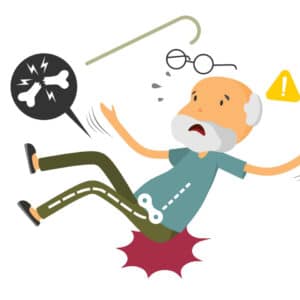
According to the National Council on Aging:
- More than one out of four Americans age 65+ falls each year
- Every 11 seconds, an older adult is treated in the emergency room because of a fall
- 60% of falls occur in the home
When one unexpectedly falls, there can be an initial rush of panic, fear, and anxiety. The body’s “fight or flight” response kicks in: stress hormones are released and heart rate increases. You may or may not feel pain; your nervous system may initially block your pain response. In this moment of panic, what should you do?

Full disclosure, I am a physical therapist with extensive experience working with older adults and my elderly mother, 93 years old as of this writing, has had no less than 5 falls over the past 10 years. This includes breaking the same arm 3 times! I have done everything in my power to keep her from falling but have clearly not been successful. I say this for those reading this who have elderly family members. You can lead the horse to water…and accidents do happen. In some cases, and at some point, our aging loved ones must have the agency to make their own decisions.
IF YOU FALL
Ok, despite everyone’s best efforts you fell. Your heart is racing and your day has been ruined.
1. Stay Calm
2. Assess Your Condition
3. Seek Medical Attention

1. Stay Calm: Falling can be disorienting and frightening. Take a few deep breaths to calm yourself and think clearly before making any decisions.
2. Assess Your Condition: Before attempting to get up, take a moment to assess yourself for injuries. Check if you can move your limbs without pain.
Self-Assess for injuries by performing the following movements:
- Ankle pumps and circles to move you ankles and feet
- Heel slides to move your hips and knees
- Wrist circles and make a fist to move wrists and hands
- Reach to the ceiling to move your shoulders and elbows
If everything moves, Great! You can now get up.
- Take your time and don’t rush the process.
- Roll onto your side.
- Use your arms to push yourself up into a crawling position.
- Once you’re on your hands and knees, assess how you feel. If you’re feeling dizzy or unstable, stay in this position until you regain your balance.
- Crawl if necessary to a stable and sturdy piece of furniture, like a chair or countertop, for support as you get up off the floor.
- Seek medical attention as you could have sustained a head injury and not realize it.
- Call a family member or friend to let them know what has happened.
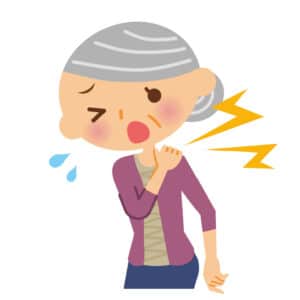
If you cannot move one of your arms/wrists,
you must crawl or scoot with the “good” arm only. Then follow the guidelines for getting up off the floor.
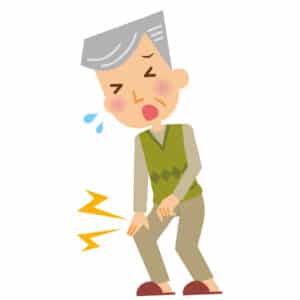
If you cannot move one or more areas of your lower body,
your only options are to:
- Activate your life alert system
- If you don’t have a life alert system or a phone at hand, scoot yourself backward in a sitting position to a phone and call 911 for help.
If you have injuries to both upper and lower extremities,
you should avoid moving as much as possible.
- Hopefully you have either a life alert system, an Apple watch with fall detection, and/or a phone on your person to call for help.
- If you do not have any of these, call out as loud as you can to alert anyone that may be within hearing distance.
- Always call 911 as soon as possible. You need to be assessed professionally.
- Then contact family members or friends.
- Try to stay as comfortable as possible while waiting for help. You can adjust your position to relieve pressure on any uncomfortable areas.
3. Seek Medical Attention and Notify a Loved One:
It cannot be said enough. Get medically assessed. You may have injuries that are not initially apparent. My sister tripped in her home a few months ago. She hit her head and felt “fine.” She did not inform anyone until 2 days later. At 2am she called her daughter because she was so dizzy she couldn’t get up and needed to be taken to the ER. Turns out she had a concussion.
PREPARATION JUST IN CASE YOU FALL
Ok, you haven’t fallen and you have done everything you can to decrease the likelihood that you will fall. But just in case you do experience a fall there are some things you can do to mitigate the consequences.
- Alert system: You cannot predict when you will fall. If you have limited mobility and, under the best of circumstances, you are unable to get up from the floor and you are alone for periods of time in your home, you need to have either a life alert system or an Apple watch with fall detection enabled. An alternative is to have a phone on your body at all times. It can be kept in a small purse or fanny pack. But if you are unconscious, you will not be able to call for help. So if you live alone this is not an ideal solution.
- Phone always handy: There should be a phone in every room that you can reach from the ground in case you fall and cannot stand up due to an injury, ie: on a low table. Or you should keep a phone on you at all times.
- Be trained in how to get yourself up off the floor and practice this skill regularly. Our Be Active Be Well therapists can teach you strategies for getting up from the floor as part of a fall risk assessment.
- Be trained in a basic self-injury assessment to determine if you should try to stand, crawl, or need to scoot to get help.
Because no one wants to fall…
Let’s decrease the chance that you or your loved one will fall.
Keep Your Home Safe
See my blog, Aging Safely in Your Own Home: A Comprehensive Guide, for a deep discussion of this topic.
Slow position changes
- When getting out of bed, sit at the edge of the bed for a few moments to make sure there is no onset of dizziness or lightheadedness. Then stand slowly and proceed.
- It is better to feel the dizziness when sitting or standing by a chair rather than being in the middle of a room. If you feel dizzy, sit until your head clears.
Increase Your Activity; every step counts!
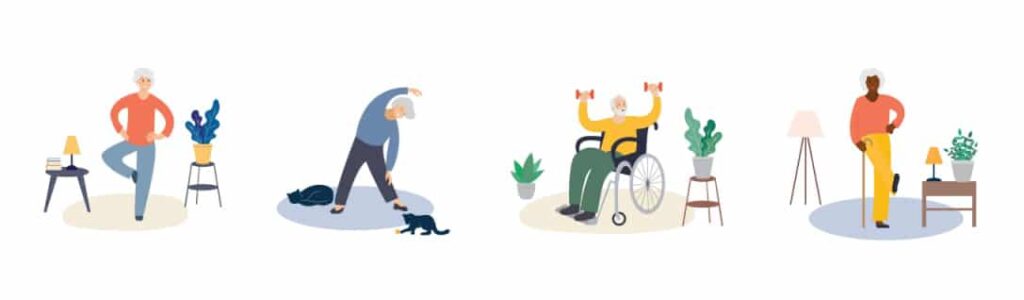
Keep your body mobile and strong. This does not necessarily mean that you must exercise at a high intensity. It is most important to simply move more during the day; short bouts of activity throughout the day will make a huge difference in decreasing your fall risk.
- Do not sit for more than 2 hours at a time during the day. Once every couple of hours, walk or do some standing activity for 1-2 minutes. Build this activity into your day. For example:
- When your TV program ends, stand or walk;
- Put the TV remote across the room;
- Keep only a small glass of water so that you need to get up to refill it more frequently.
- Sit to stand 2-3 times every time you return from the bathroom or 5-10 times before each meal.
- If you are healthy and mobile, when out in the community you can:
- Park further from your destination;
- Use stairs instead of elevator;
- Get together with friends and walk, walk in a mall if it is too hot or cold outside.
The National Council on Aging’s
6 Steps to Prevent a Fall
- Find a good balance and exercise program. Look to build balance, strength, and Flexibility. We at Be Active Be Well have many excellent therapists that can set you or your loved one up with a customized balance program. We have personal trainers who can assist you in maintaining that program.
- Talk to your health care provider. Ask for an assessment of your risk of falling. Our Be Active Be Well therapists are trained in fall risk assessment.
- Regularly review your medication with your doctor or pharmacist.
- Get your vision and hearing checked annually and update your glasses. Your eyes and ears are key to keeping you on your feet. People with mild hearing loss are nearly three times as likely to fall, with each 10 decibels of hearing loss increasing falls risk!
- Keep your home safe. Remove tripping hazards, increase lighting, make stairs safe, install grab bars. (See more detail in my previous blog)
- Talk to family members. Enlist their support in taking steps to stay safe. If you have a loved one who is at risk for falls, the conversation can be difficult. But it is a critical conversation to have.
REFERENCES
Did you find this topic interesting? Below are more in depth articles.
- Check for Safety: A Home Fall Prevention Check List for Older Adults– CDC
- Aging Well: Making Your Home Fall-Proof – Kaiser Permanente
- 6 Home Improvements to Help You Age in Place – US News
- 6 Steps to Help Prevent Falls in Older Adults – National Council on Aging
- Handouts available in English, Spanish, and Portuguese
- 6 Falls Prevention Steps to Help Your Older Loved Ones – National Council on Aging
- Talking To Your Loved One About Fall Risk – Jukebox Health
- Should You Use Apple Watch for Fall Detection in 2023? Experts Weigh In – National Council on Aging
- Apple Watch Fall Detection: How It Works – Forbes
Joanne Bedwell, PT is the Resident Blogger at Be Active Be Well. She lives and works in San Francisco with her husband and two (almost) grown daughters. Having over 25 years of experience as a PT, she sees clients in their homes and teaches fitness classes in person and virtually.
DISCLAIMER: This article contains information that is intended to help the readers be better informed regarding exercise and health care. It is presented as general advice on health care. Always consult your doctor for your individual needs. Before beginning any new exercise program it is recommended that you seek medical advice from your personal physician. This article is not intended to be a substitute for the medical advice of a licensed physician. The reader should consult with their doctor in any matters relating to his/her health.
We provide in-home assessments in the San Francisco Bay Area. Contact us for a personalized Physical Therapy, Occupational Therapy, or Speech Therapy assessment.