
You Don’t Need an Hour
The official exercise guidelines are important, but research increasingly shows that health benefits can occur with much smaller amounts of movement.
Federal CDC guidelines recommend:
- At least 150 minutes of moderate aerobic activity each week
- Or 75 minutes of vigorous activity (activity that noticeably increases your breathing or heart rate)
- Strength training for all major muscle groups at least twice weekly
- For additional health benefits, the recommendations increase even further
Feeling overwhelmed? There is good news!
For many people, those numbers feel overwhelming. But emerging research offers encouraging news: smaller amounts of movement may still improve strength, cardiovascular health, and longevity.
Short Cardiovascular Bursts Can Still Improve Health
A 2014 study found that even short bursts of vigorous exercise, just 5 to 10 minutes at a time, totaling as little as 30 minutes per week were associated with reduced mortality. Running was used in the study, but the specific activity is less important than the intensity. Choose an activity that matches your fitness level and preferences and noticeably increases your breathing or heart rate.
- 5–10 minute sessions of vigorous activity
- As little as 30 minutes/week
- Decreased mortality
Strength Gains Don’t Require Hours in the Gym
Fewer reps with greater intensity
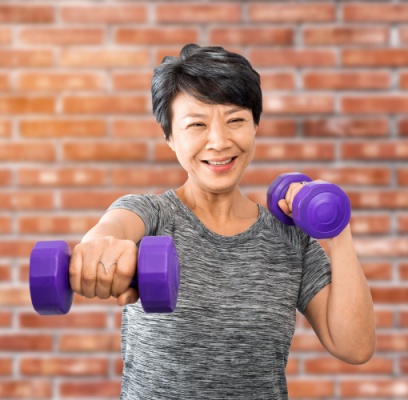
A 2021 study found that just one 20-minute strength training session per week increased participants’ strength by 30% over one year. The program was simple: 6 exercises with only 5 to 6 repetitions each. The key was using enough resistance so the final repetition felt very challenging while still maintaining good form. In the study, ‘very challenging’ meant participants could not complete 1–2 additional repetitions with good form.
- 20-minute workout once weekly
- 5–6 reps of 6 exercises
- Participants gained ~30% strength in a year
- Training close to fatigue matters more than long workouts
Some Really Is Better Than None
Research consistently shows that even small amounts of exercise are associated with lower mortality risk compared with doing none. The greatest health gains occur when someone moves from doing nothing to doing even a small amount of exercise; some exercises it truly better than no exercise!
- Benefits seen compared with doing no strength training
- Lower risks of all-causes of mortality
Turn Everyday Tasks Into Exercise – Functional Fitness
- Carrying groceries = grip strength + core
- Stairs = leg strength + balance
- Repeated sit-to-stands = Leg strength + functional mobility
Make It Functional, Not Fancy

- Take the stairs whenever possible instead of the elevator
- Park farther away from your destination and add some steps to your day. Whether the farthest parking space in the lot or a block away. Take the few extra minutes for your health.
- Do a few squats before sitting down to eat meals
- Put items upstairs/downstairs in your home on purpose (adds extra trips)
- Walk during phone calls
- If walking is part of your daily routine, pick up your pace to improve your cardiovascular fitness.
Small choices repeated throughout the day can add up to meaningful health benefits over time.
The Secret to Making It Stick
Build Movement Into Existing Routines
So if short bouts of movement matter, the next question becomes: How can you fit exercise into a normal day without needing a gym, special clothes, or a full hour of free time?
- Focus on consistency, not perfection
- Lower the bar: “1 minute counts” mindset
- Make it visible: leave walking shoes by the door
- Habit Stacking: Pair movement with existing habits
Habit Stacking
Habit stacking is attaching an activity that you want to do to an activity that you habitually perform. For example, if I want to make my legs stronger and balance better, I can stand on 1 leg while I brush my teeth. Because brushing your teeth is a habitual activity, soon the combination will become the habit. The possibilities are infinite.
You don’t need an hour. You need intention.
Movement is already built into your day, you just have to claim it.
A few minutes here and there may not feel like much, but over weeks, months, and years, those small choices add up to stronger muscles, healthier hearts, better mobility, and greater independence.
Exercise does not have to be perfect, structured, or time-consuming to improve health. Small bursts of movement performed consistently throughout the day can add up in meaningful ways. The best exercise is often the activity you can realistically continue doing.

Be Active Be Well
Ready to get moving again—safely and confidently?
Whether you’re dealing with chronic pain, recovering from an injury, or simply feeling stuck, our expert team is here to help. We offer personalized Physical Therapy, Occupational Therapy, and Speech Therapy assessments, all from the comfort of your home.
Serving the San Francisco Bay Area—including Santa Clara, San Mateo, San Francisco, and Marin Counties—we bring compassionate, evidence-based care right to your doorstep.
Let’s work together to keep your body in motion and your mind at ease. Contact us today to get started!
Joanne Bedwell, PT, is the Resident Blogger at Be Active Be Well. Based in San Francisco, she lives with her husband and two nearly grown daughters. With over 25 years of experience as a physical therapist, she provides in-home client care and teaches fitness classes both in person and online.
DISCLAIMER: This article is intended to provide general information to help readers make informed decisions about exercise and health. It is not a substitute for professional medical advice, diagnosis, or treatment. Always consult your physician or another qualified health provider before starting any new exercise program or making changes to your health care. Never disregard or delay seeking medical advice because of something you have read in this article.