
Understanding firmness, texture, diameter, and length to find the best roller for your mobility goals

Walk into almost any sporting goods store or browse online, and you’ll find dozens of foam rollers in different colors, shapes, sizes, textures, and densities. Some are smooth, others are covered with ridges and bumps. Some are long enough to support your entire spine, while others are small enough to fit in a suitcase.
With so many choices, it’s natural to wonder: Which foam roller is right for me?
The answer depends on your experience, comfort level, goals, and how you plan to use it.. Contrary to popular belief, the firmest roller isn’t always the best one. In fact, for many people, especially beginners, older adults, or those recovering from injury, a softer roller is often a better choice.
Key Takeaway: The best foam roller is not necessarily the firmest or most expensive. The right roller depends on your body, your goals, and how you plan to use it. Comfort and consistency matter more than intensity.
What Does a Foam Roller Actually Do?
As we discussed in our recent blog about fascia (Fascia: The Hidden Tissue That Keeps You Moving), this remarkable connective tissue forms a continuous web throughout the body, surrounding and supporting muscles, bones, nerves, blood vessels, and organs. Healthy fascia allows tissues to glide smoothly during movement, while restrictions or increased stiffness may contribute to discomfort and reduced mobility.
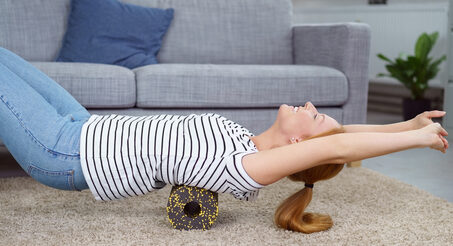
Foam rolling, often referred to as self-myofascial release, applies pressure to muscles and the surrounding connective tissues, including fascia. Although the term “self-myofascial release” is widely used, current evidence suggests that foam rolling does not actually “release” or permanently alter fascial tissue. Instead, its benefits appear to result from temporary changes in tissue mobility, muscle stiffness, and the nervous system.
Research suggests that foam rolling can:
- Improve short-term flexibility and joint range of motion
- Reduce muscle soreness after exercise
- Decrease the sensation of muscle tightness
- Help prepare muscles for activity or aid recovery afterward
- Improve comfort during movement
However, foam rolling is often surrounded by exaggerated claims. Current research does not support the idea that foam rollers:
- Break up scar tissue
- Permanently change or “reshape” fascia
- Eliminate trigger points
- Flush toxins from muscles
- Replace stretching or strengthening exercises
Think of foam rolling as one tool in your movement toolbox, not a cure-all.
What to look for when selecting a foam roller
1. Firmness: The Most Important Decision
Foam rollers are available in a wide range of densities, from super soft to extra firm. The right choice depends on your comfort level, body type, and experience. While many people assume a firmer roller provides a deeper or more effective treatment, that’s not necessarily true. Choosing the right firmness can make the difference between a roller you’ll use regularly and one that ends up collecting dust in the closet.
Soft Foam Rollers
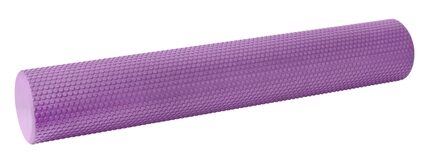
Soft-density rollers are ideal for:
- Beginners
- Older adults
- Individuals with chronic pain or fibromyalgia
- People recovering from injury
- Anyone who is sensitive to pressure or finds traditional rollers uncomfortable
Because they compress slightly under body weight, they provide a gentler experience while still helping reduce muscle tension and improve mobility.
Firm Foam Rollers
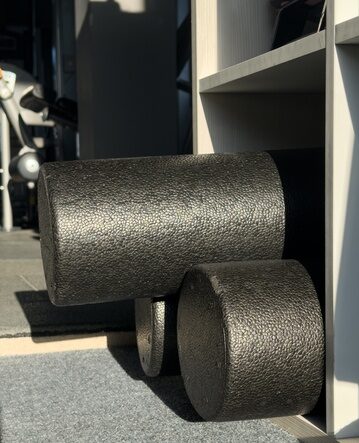
Firm rollers provide deeper pressure and are commonly used by athletes and experienced exercisers.
In fact, if you’ve ever stretched at a commercial gym, you’ve probably seen them. The black foam rollers commonly found in gym stretching areas are typically high-density rollers designed to withstand heavy daily use. They resist compression and deliver more intense pressure than softer rollers.
While these rollers are extremely durable, they are not necessarily the best choice for beginners. If the pressure causes you to tense your muscles, hold your breath, or avoid using the roller altogether, it’s probably too firm for your current needs.
Physical Therapist Tip: Foam rolling should create a sensation of “good pressure,” not sharp pain. If you find yourself holding your breath, tensing your muscles, or avoiding certain areas because the pressure is uncomfortable, the roller is probably too firm. Remember, more pain does not equal better results.
For example, the OPTP PRO-Roller® Soft is an excellent choice for beginners and older adults, while the OPTP PRO-Roller® Standard provides the firmer feel that many experienced exercisers prefer.
2. Smooth vs. Textured Rollers
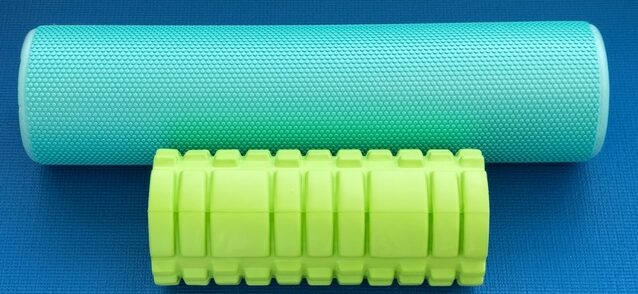
Textured rollers feature raised bumps, ridges, or knobs that are marketed as providing a deeper massage.
Although some users prefer the sensation, current research has not demonstrated that textured rollers provide superior results compared to smooth rollers.
Smooth Rollers
For most people, smooth rollers are the better option because they:
- Apply pressure evenly
- Are more comfortable
- Are easier to control
- Are suitable for daily use
Textured Rollers
These may appeal to experienced users who enjoy more concentrated pressure, but they can also be uncomfortable for beginners and individuals with sensitive tissues.
For most people, especially older adults, a smooth roller is the better starting point.
3. Half Roller vs. Full Roller
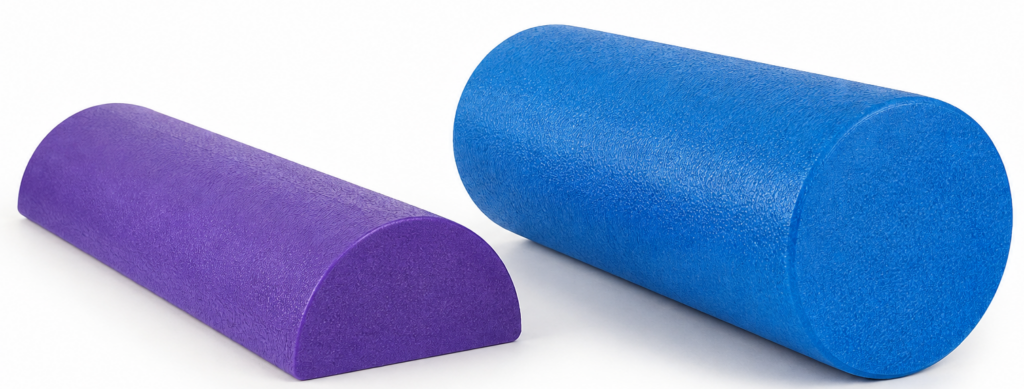
Full Round Rollers
These are the classic foam rollers used for rolling the calves, hamstrings, quadriceps, gluteal muscles, and upper back.
If your primary goal is self-massage, a full roller is usually the best choice.
Half Rollers
Half rollers have a flat bottom that prevents them from rolling away.
Although they aren’t ideal for traditional foam rolling, they are excellent for:
- Balance exercises
- Shoulder mobility
- Foot and ankle stretching
- Chest-opening exercises
- Posture training
- Core stability exercises
Many physical therapists keep both styles available because they serve different purposes.
4. Diameter Matters
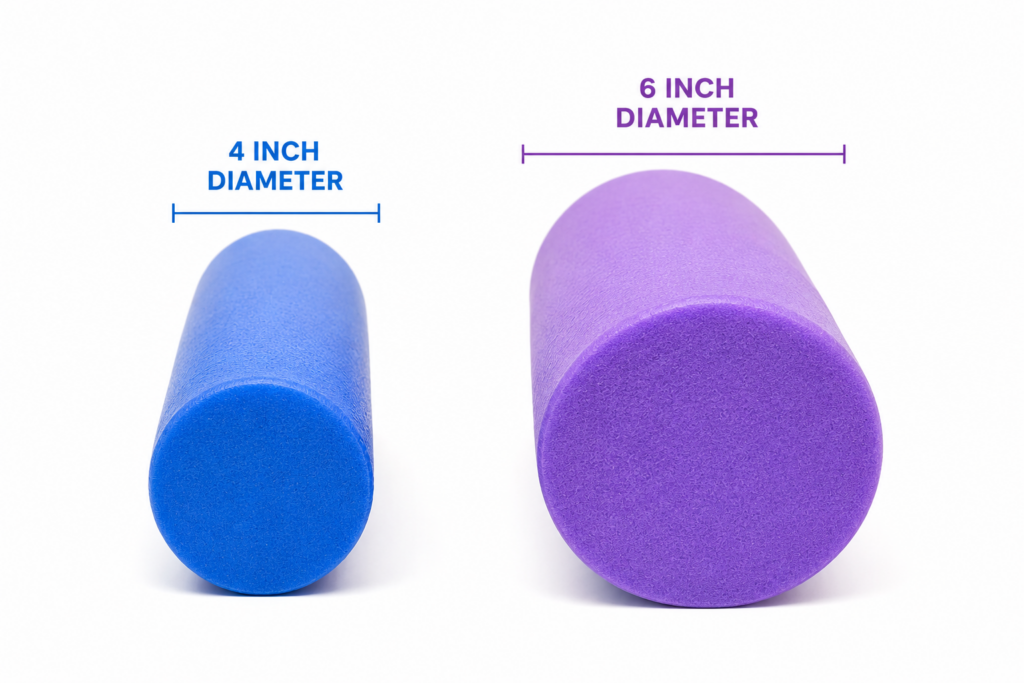
Foam rollers commonly come in different diameters, with 4-inch and 6-inch rollers being the most popular options. The best choice depends on your goals, comfort level, and how you plan to use the roller.
4-Inch Diameter Rollers
A 4-inch full round roller places your body closer to the floor, which can provide a greater sense of stability and control. This can be especially helpful for older adults, beginners, or anyone who feels less comfortable balancing on a taller roller.
Advantages include:
- Greater stability and confidence during exercises
- Less height to lift the body during rolling
- More comfortable positioning for chest-opening and posture exercises
- A gentler option for individuals who prefer less intensity
Many of our older clients prefer a 4-inch roller because it feels more secure and less intimidating while still providing the benefits of foam rolling and mobility exercises.
6-Inch Diameter Rollers
The traditional 6-inch roller is the most common size and is frequently found in gyms, fitness studios, and rehabilitation settings.
Advantages include:
- Greater height for certain exercises
- More challenge for balance and stability activities
- A versatile option for general foam rolling
- Better suited for individuals comfortable with a higher roller
For many active exercisers, the 6-inch roller provides a good combination of support and challenge. However, a taller roller is not necessarily better, especially for beginners or individuals who prioritize comfort and control.
Physical Therapist Tip: The best diameter is the one that allows you to feel stable, relaxed, and confident while performing your exercises. A roller that feels safe and comfortable is more likely to become a tool you use consistently.
5. Choosing the Right Length
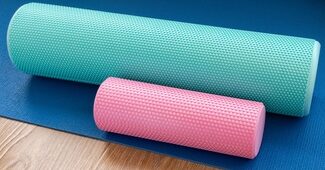
12-inch Roller
Pros:
- Portable
- Easy to pack
- Good for arms and calves
Cons:
- Too short for many back and posture exercises
18-inch Roller
An 18-inch roller is a versatile middle-ground option that works well for many home exercise programs. It is long enough for most muscle groups and mobility exercises while remaining easy to store and transport.
However, an 18-inch roller may not provide enough length to fully support both the head and low back at the same time during certain exercises, such as chest-opening stretches or posture exercises. If your goal is to use the roller for full-spine support, a longer 36-inch roller may be a better choice.
36-inch Roller
The longest roller is ideal for:
- Supporting the entire spine
- Chest-opening stretches
- Posture exercises
- Balance activities
Many therapists use 36-inch rollers because they offer excellent support and versatility for posture, mobility, and stretching exercises.
Our Trusted Recommendation: When patients ask where to purchase a quality foam roller, one manufacturer we frequently recommend is OPTP. Their rollers are widely used by physical therapists, occupational therapists, athletic trainers, and other rehabilitation professionals.
OPTP offers a wide variety of options, including:
- Soft rollers
- Medium-density rollers
- Firm rollers
- Half rollers
- Full rollers
- Different lengths and diameters
Their products are well made, durable, and available in configurations appropriate for beginners through experienced users. While OPTP is one of our trusted sources, the most important consideration is choosing a roller that matches your individual needs and goals.
Which Foam Roller Should You Choose?
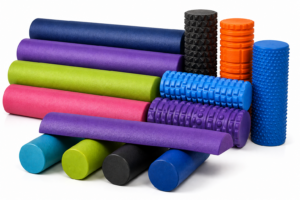
With so many options available, choosing a foam roller can feel overwhelming. The choice truly depends on your individual needs, comfort level, experience, and how you plan to use it.
A good foam roller should allow you to relax, breathe normally, and perform your exercises comfortably. Whether you choose a softer or firmer roller, a 4-inch or 6-inch diameter, a shorter or longer length, or a smooth or textured surface, the most important factor is selecting a roller that fits your goals and encourages consistent use.
Remember, foam rolling shouldn’t feel like punishment. A comfortable roller that you use consistently will provide far greater benefits than an overly aggressive one that stays in the closet.
Be Active Be Well
Ready to get moving again—safely and confidently?
Whether you’re dealing with chronic pain, recovering from an injury, or simply feeling stuck, our expert team is here to help. We offer personalized Physical Therapy, Occupational Therapy, and Speech Therapy assessments, all from the comfort of your home.
Serving the San Francisco Bay Area—including Santa Clara, San Mateo, San Francisco, and Marin Counties—we bring compassionate, evidence-based care right to your doorstep.
Let’s work together to keep your body in motion and your mind at ease. Contact us today to get started!
REFERENCES
· Cheatham SW, Kolber MJ, Cain M, Lee M. The effects of self-myofascial release using a foam roll or roller massager on joint range of motion, muscle recovery, and performance: A systematic review. International Journal of Sports Physical Therapy. 2015.
· Wiewelhove T, Döweling A, Schneider C, et al. A Meta-analysis of the Effects of Foam Rolling on Performance and Recovery. Frontiers in Physiology. 2019.
· Wilke J, Müller AL, Giesche F, et al. Acute Effects of Foam Rolling on Range of Motion: A Systematic Review and Meta-analysis. Sports Medicine. 2020.
· Behm DG, Wilke J. Do Self-Myofascial Release Devices Release Myofascia? Rolling Mechanisms: A Narrative Review. Sports Medicine. 2019.
Joanne Bedwell, PT, is the Resident Blogger at Be Active Be Well. Based in San Francisco, she lives with her husband and two nearly grown daughters. With over 25 years of experience as a physical therapist, she provides in-home client care and teaches fitness classes both in person and online.
DISCLAIMER: This article is intended to provide general information to help readers make informed decisions about exercise and health. It is not a substitute for professional medical advice, diagnosis, or treatment. Always consult your physician or another qualified health provider before starting any new exercise program or making changes to your health care. Never disregard or delay seeking medical advice because of something you have read in this article.