
Do your shoulders feel tight after a day at the computer, or your back seems stiff first thing in the morning. Most of us blame our muscles, but another tissue may also be playing a role: fascia.
Until recently, fascia was largely overlooked by scientists and healthcare professionals. During anatomy dissections, it was often removed to expose the muscles underneath, leading many people to think it was simply “packing material.” Today, research tells a different story. Fascia is a living, adaptable tissue that surrounds and connects nearly every structure in your body. It plays an important role in movement, posture, balance, and even how we experience pain.
While researchers are still uncovering all of fascia’s functions, one message is already clear: healthy fascia depends on healthy movement.
What Is Fascia?
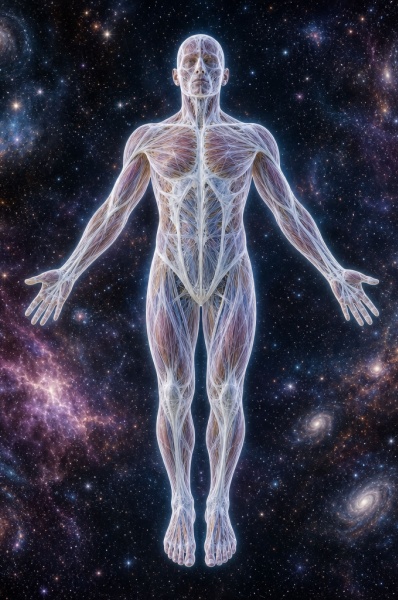
Imagine your body wrapped in one continuous three-dimensional web. Rather than existing as separate pieces around individual muscles, fascia forms an interconnected network that extends from your head to your toes This helps your body function as an integrated system rather than a collection of individual parts.
Dense and Loose Fascia
Your body contains two primary types of fascia that work together.
Dense fascia: the body’s strong support tissue
Dense fascia is rich in collagen, providing strength and stability. It helps muscles generate force, stabilizes joints, and gives your body much of its structural shape. Examples include: the Iliotibial (IT) band along the outside of the thigh. The Thoracolumbar fascia spanning the length of the spine from the neck to the sacrum, and the Plantar fascia along the bottom of the foot.
Loose fascia: the slippery tissue that decreases friction
Loose fascia contains more fluid and is more flexible. It is the slippery tissue that allows muscles, tendons, and organs to glide smoothly against one another during movement. For example, imagine your quadriceps muscles. Each muscle is wrapped in loose fascia that allows the muscles to glide past one another as you bend and straighten your knee.
Why Does Fascia Matter?
Researchers now recognize fascia as much more than a wrapping around muscles. It contributes to several important functions throughout the body.
It Helps You Move Efficiently
When fascia moves freely, muscles can contract and relax with less resistance. Layers of tissue slide smoothly over one another, making everyday activities feel easier and more comfortable.
It Helps Distribute Force
Every movement you make involves more than a single muscle. Fascia helps transfer force throughout the body, allowing multiple muscles and joints to work together as one coordinated system. That’s one reason why pain or tightness in one area can sometimes influence movement somewhere else.
It Helps You Know Where Your Body Is
Fascia contains thousands of sensory nerve endings that provide information about body position and movement; a sense called proprioception.
Whether you’re walking on uneven ground, reaching overhead, or recovering your balance after tripping, fascia helps your brain understand where your body is in space.
It May Contribute to Pain
Researchers once believed pain originated primarily from muscles, joints, or nerves. We now know fascia itself contains numerous pain-sensitive nerve endings.
Although scientists are still studying exactly how fascia contributes to chronic pain, evidence suggests that changes within fascial tissue may play a role in conditions such as persistent low back pain and myofascial pain syndromes.
What Happens When Fascia Becomes Less Mobile?
Like muscles, fascia responds to how we use, or don’t use, our bodies.
Periods of prolonged sitting, repetitive postures, injury, surgery, or simply getting older can change the way fascial tissues move. The slippery layers that normally glide over one another may become less mobile, making movement feel more restricted. One reason many people feel better after a walk or gentle stretching is that movement encourages these tissues to slide more freely again.

5 Signs Your Fascia May Need More Movement
✔ You feel stiff when you first get out of bed.
✔ You feel better after walking for 5–10 minutes.
✔ You sit for long periods without changing position.
✔ Reaching, bending, or twisting feels harder than it used to.
✔ You often describe yourself as “tight,” even though stretching only helps temporarily.
Can Fascia Really Get “Stuck”?
If you’ve spent time on social media, you’ve probably heard someone claim that their fascia is “stuck” or that a special treatment can “break up adhesions.”
The truth is more nuanced.
After surgery or significant injury, scar tissue can reduce mobility between tissue layers. However, for most people, fascia isn’t literally glued together. Instead, it may become less adaptable, less mobile, or more sensitive to movement.
Similarly, treatments like massage, foam rolling, and myofascial release don’t “melt” fascia or break apart scar tissue. Instead, they may temporarily reduce pain, improve comfort, and help restore normal movement patterns through a combination of mechanical and nervous system effects.
In other words, fascia is real, but many of the claims made about it are oversimplified. Fortunately, the story doesn’t end there. The same tissue that adapts to inactivity also adapts remarkably well to regular movement.
Keeping Fascia Healthy: Movement Comes First
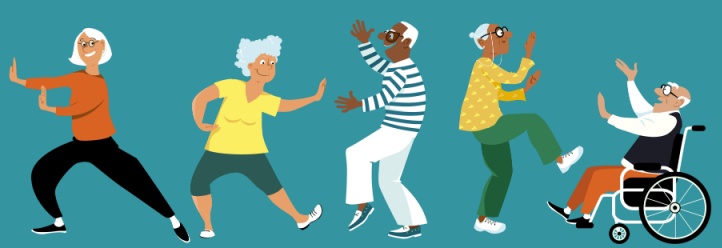
The good news is that fascia is a living tissue that continually adapts throughout your life. Just as muscles become stronger with exercise, fascia also responds to regular movement and loading.
Movement helps the layers of fascia slide over one another, stimulates the cells that maintain connective tissue, and helps prevent stiffness associated with prolonged inactivity. Fortunately, you don’t need a specialized “fascia workout.” Simple, regular movement throughout the day is one of the best ways to support healthy fascia.
Fortunately, you don’t need a specialized “fascia workout.” Almost any activity that gets you moving, walking, strength training, yoga, swimming, dancing, gardening, or simply changing positions more often, can help keep fascia healthy.
Move Frequently
The simplest strategy may also be the most effective.
Avoid remaining in one position for hours at a time. Standing up, walking, and changing positions throughout the day helps keep tissues moving.
Move in Different Ways
Our bodies thrive on variety.
Walking is excellent, but adding activities that involve reaching, twisting, balancing, and changing directions challenges fascia in different ways.
Strength Train
Strength training doesn’t just build muscles, it also places healthy loads on connective tissue, encouraging fascia to remain strong and resilient.
Stretch and Practice Mobility
Stretching can temporarily improve flexibility and reduce feelings of stiffness. Mobility exercises that move joints through their full range of motion may provide additional benefits when performed regularly.
Stay Hydrated
Hydration supports the health of all body tissues, including connective tissue. While drinking extra water won’t magically “hydrate your fascia,” staying well hydrated is part of maintaining healthy tissues throughout the body.
Manual Therapy and Movement: A Team Approach
If you’ve ever received a massage, had a therapist use metal instruments on your muscles, or seen someone with circular marks from cupping, you may have wondered whether these treatments actually change fascia.
The answer is still being studied.

Research suggests that several hands-on techniques can help reduce pain, improve mobility, and make movement feel easier—at least in the short term. While scientists continue to investigate exactly how these treatments work, they appear to influence both the connective tissues and the nervous system. Most experts agree that the greatest long-term benefits occur when manual therapy is combined with movement and exercise.
Here are some of the techniques commonly used by physical and occupational therapists:
Massage Therapy
Massage uses pressure and movement to reduce muscle tension, improve circulation, and decrease pain. Many people notice they move more comfortably and feel less stiff after treatment. (See our blog: Knead to Know: Why Physical Therapy Massage Is More Than Just a Massage)
Myofascial Release
Myofascial release involves applying gentle, sustained pressure to areas of tissue restriction. Rather than “breaking up” fascia, this technique is thought to help improve tissue mobility, reduce discomfort, and encourage more natural movement.
Instrument-Assisted Soft Tissue Mobilization (IASTM)
IASTM uses specially designed stainless-steel instruments to glide over the skin and soft tissues. One well-known example is the Graston® Technique. Therapists often use IASTM to treat painful or restricted tissues following injury or overuse.
Research suggests it may help reduce pain and improve flexibility for some musculoskeletal conditions, although scientists are still determining exactly how these improvements occur.
Cupping Therapy
Cupping uses gentle suction to lift the skin and underlying tissues. The treatment often leaves temporary circular marks that fade within several days.
Some studies suggest cupping may help reduce pain and improve short-term mobility for certain conditions. However, more high-quality research is needed to determine its long-term effectiveness and the conditions for which it is most beneficial.
Joint Mobilization
Sometimes restricted movement isn’t coming from the muscles or fascia alone—it may also involve the joints. Physical therapists use gentle, skilled movements called joint mobilizations to improve joint motion, decrease pain, and restore normal movement patterns. Improving joint mobility can also help surrounding muscles and fascia move more efficiently.
Stretching and Mobility Exercises
Stretching and mobility exercises complement manual therapy by encouraging muscles, joints, and fascial tissues to move through their available range of motion. While stretching may temporarily improve flexibility, consistent movement and exercise are what help maintain those gains over time. (See our blog: Can Muscles Really Stretch)
Neuromuscular Re-education
Pain, injury, or prolonged inactivity can change the way your body moves. Neuromuscular re-education uses specific exercises and movement training to help your brain and body relearn efficient movement patterns, improve balance and coordination, and restore normal muscle activation. This is especially important because moving well, not just moving more, is key to long-term recovery.
When Should You Seek Help?
Most stiffness after sitting or exercise improves with regular movement. However, if you have persistent pain, limited mobility, or difficulty performing everyday activities, it may be time to consult a physical or occupational therapist.
Your therapist will evaluate the entire movement system, not just the area that hurts, to identify the factors contributing to your symptoms. Treatment may include education, exercise, manual therapy, joint mobilization, neuromuscular re-education, and strategies to help you move more efficiently and confidently.
The Bottom Line
Fascia may not receive as much attention as muscles or bones, but it quietly helps every part of your body work together. This remarkable connective tissue provides support, allows tissues to glide smoothly, contributes to balance and body awareness, and may even influence how we experience pain.
Although researchers continue to learn more about fascia, one recommendation remains remarkably consistent: keep moving.
Whether you enjoy walking, strength training, yoga, dancing, pickleball, gardening, or simply getting up from your desk every hour, movement is one of the best ways to support healthy fascia.
You don’t need expensive gadgets or miracle treatments. Your fascia was designed to move, and it benefits every time you do.

Be Active Be Well
RESOURCES
Interested in learning more? Explore these in-depth articles for deeper insights.
- The Tissue That Connects Our Muscles May Be a Key to Better Health – Danielle Friedman, The New York Times, 2023 Sept 11
- Second International Fascia Research Congress – Thomas W Findley, editorial, Int J Ther Massage Bodywork. 2009 Jun 29
- Fascial tissue research in sports medicine: from molecules to tissue adaptation, injury and diagnostics: consensus statement – Martina Zügel, et al. Br J Sports Med , 2018 Aug 2
- The Lumbodorsal Fascia as a Potential Source of Low Back Pain: A Narrative Review – Jan Wilke, et al. Biomed Res Int , 2017 May 11
- Fascia Mobility, Proprioception, and Myofascial Pain – Helene M Langevin, Life (Basel). 2021 Jul 8
Be Active Be Well
Ready to get moving again—safely and confidently?
Whether you’re dealing with chronic pain, recovering from an injury, or simply feeling stuck, our expert team is here to help. We offer personalized Physical Therapy, Occupational Therapy, and Speech Therapy assessments, all from the comfort of your home.
Serving the San Francisco Bay Area—including Santa Clara, San Mateo, San Francisco, and Marin Counties—we bring compassionate, evidence-based care right to your doorstep.
Let’s work together to keep your body in motion and your mind at ease. Contact us today to get started!
Joanne Bedwell, PT, is the Resident Blogger at Be Active Be Well. Based in San Francisco, she lives with her husband and two nearly grown daughters. With over 25 years of experience as a physical therapist, she provides in-home client care and teaches fitness classes both in person and online.
DISCLAIMER: This article is intended to provide general information to help readers make informed decisions about exercise and health. It is not a substitute for professional medical advice, diagnosis, or treatment. Always consult your physician or another qualified health provider before starting any new exercise program or making changes to your health care. Never disregard or delay seeking medical advice because of something you have read in this article.