

What is Occupational Therapy? A Guide to OT’s Role in Home Care.
When I first started practicing occupational therapy in 1986, I never imagined how deeply rewarding it would be to help people regain their independence in their own homes. Over the past 30 years, working in home care has shown me just how much small changes can transform lives—whether it’s modifying a living space for safety, helping someone relearn daily tasks after a stroke, or simply giving a client the confidence to care for themselves again.
My passion for OT stems from a belief that everyone deserves to live with dignity and purpose, no matter their age or condition. In this blog, I’ll share what occupational therapy is, how it can support individuals at home, and why it’s such a valuable resource for those facing challenges in daily life.
What is Occupational Therapy?
Occupational therapists bring a unique perspective to health care, focusing on how illness affects a person’s ability to manage daily routines and occupations. At the core of occupational therapy is volition, where occupational therapists assess what motivates and is meaningful to a client. This foundational concept underscores all aspects of OT therapy, guiding efforts to help individuals find a balance between work, rest, and play.
To promote independence and improve quality of life, OTs build on a client’s existing strengths and addressing functional challenges, such as:
- mobility limitations
- cognitive impairments
- or difficulties with daily tasks
By implementing tailored interventions, including:
- adaptive strategies
- assistive devices
- and task modifications
How Does OT Differ From Other Therapies?
Occupational therapy (OT), physical therapy (PT), and speech-language pathology (SLP) are distinct but complementary therapies that help individuals regain function and independence.
- Occupational Therapy (OT) focuses on helping individuals perform daily activities (e.g., dressing, cooking, bathing) by improving fine motor skills, cognitive function, and adapting environments for safety. OT addresses both physical and cognitive challenges to enhance overall independence.
- Physical Therapy (PT) primarily targets movement, strength, balance, and pain relief. PT helps individuals recover from injuries, surgeries, or conditions that affect mobility and physical function.
- Speech-Language Pathology (SLP) works on communication, cognition, and swallowing disorders. SLPs help individuals with speech clarity, language comprehension, voice disorders, and difficulties with eating or drinking safely.
While PT focuses on physical movement and SLP addresses communication and swallowing, OT helps individuals integrate these skills into their everyday lives. For example, after a stroke, a patient may work with PT to regain strength and balance and with SLP to improve speech and swallowing.

OT then bridges the gap by helping patients apply these improvements to daily tasks and, most importantly, enabling them to resume hobbies and activities that bring joy and fulfillment—whether that means returning to gardening, playing an instrument, or engaging in social interactions with confidence.
Who Benefits from Occupational Therapy at Home?
Occupational therapy at home provides essential support for individuals facing a variety of challenges. Whether adapting to a chronic condition, recovering from an illness, or striving to maintain independence, OT offers practical solutions tailored to each person’s unique needs.
1. Seniors Aging in Place
Many older adults wish to remain in their homes as long as possible, and OT helps them do so safely. For example, I worked with a client with Parkinson’s for the last two years of her life, collaborating with her family and caregivers to make essential modifications that allowed her to stay in her home with comfort and dignity even as she ultimately transitioned to hospice care. Through personalized modifications, such as adapting self-care routines to ensuring safe mobility with transfer poles and other assistive devices, OT played a crucial role in maintaining her quality of life.
Looking to age safely in the comfort of your own home? Visit our blog, Aging Safely in Your Own Home: A Comprehensive Guide, for essential tips and resources to help you live independently and confidently.
2. Individuals Recovering from Injury, Illness, or Surgery
After a hospitalization or major health event, daily tasks can become difficult. OT helps individuals regain function, navigate their home safely, and adjust their routines to promote recovery

3. People with Chronic Conditions (e.g., Arthritis, Parkinson’s, Stroke Recovery)
Want to improve your movement and quality of life with Parkinson’s? Check out our blog, Parkinson’s: Move Better, Live Better , for expert insights and helpful tips.
Chronic conditions often require ongoing adjustments to maintain independence. For example, individuals with arthritis may need assistive tools such as jar openers or buttonhooks to manage daily tasks with less pain. Those recovering from a stroke might require home modifications like grab bars and one-handed kitchen adaptations to support their functional abilities. For individuals with Parkinson’s, strategies could include voice amplification devices for communication and weighted utensils to reduce tremors during meals.
OT tailors these adjustments to each person’s specific challenges, ensuring they can continue to engage in meaningful activities with greater ease and confidence. OT provides strategies for managing symptoms, using adaptive equipment, and modifying the home environment.
In the case of my client with Parkinson’s, I recommended adaptive eating utensils to prolong her ability to feed herself independently, as well as transitioning from showering to sponge baths when mobility became too difficult.
4. Individuals with Disabilities or Cognitive Challenges
For people with lifelong disabilities or cognitive conditions, OT helps develop skills and strategies to promote independence and engagement in meaningful activities. OT is not just about physical function—it’s also about helping clients find meaning, purpose, and engagement in their daily lives.
One of my most rewarding experiences was working with a dementia client in an assisted living facility who loved to paint. Initially, she resisted participating in painting activities, but I had the idea of shifting the dynamic—asking her to teach me how to paint. This simple yet powerful approach reignited her enthusiasm, giving her a sense of agency and confidence.
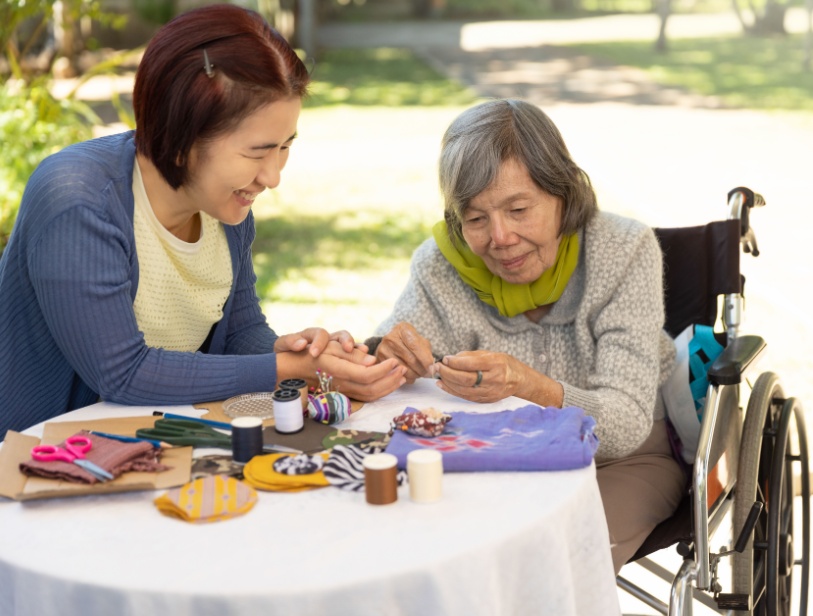
By structuring sessions that incorporated familiar painting techniques, adapting tools to accommodate her motor challenges, and reinforcing a consistent daily routine, OT helped her maintain a sense of autonomy and artistic expression.
Engaging in meaningful activities like painting not only provided emotional fulfillment but also supported cognitive function and social interaction, allowing her to connect with caregivers and fellow residents through her artwork. Additionally, OT helped her stay physically active and socially engaged, which contributed to her well-being before she eventually transitioned to a dementia unit.
What Does an Occupational Therapist Do in the Home Setting?
Contact us for a personalized Occupational Therapy assessment with Patricia or one of our other amazing OT, PT, or SLPs. We provide in-home consultations in the San Francisco Bay Area: Santa Clara, San Mateo, San Francisco, and Marin Counties.
Home Safety Assessments
- Identify fall risks and recommending modifications
- Recommend adaptive equipment (grab bars, non-slip mats, etc.).
Want to know what steps to take if you fall? Check out our blog, What Do I Do If I Fall?, for expert tips and valuable resources to help you stay safe and confident.
Activities of Daily Living (ADL) Training
- Help clients with daily routines such as dressing, bathing, cooking, and other essential tasks.
- Teach energy conservation techniques to help clients manage fatigue, reduce strain on their bodies, and perform daily activities more efficiently with less exhaustion. Provide strategies to help manage medications effectively, ensuring they are taken correctly and on time.
Cognitive and Memory Support

- Develop strategies for individuals with dementia or cognitive impairments to support daily functioning.
- Support clients in enhancing cognition, problem-solving skills, and safety awareness to improve daily functioning and independence.
- Introduce memory aids and organization techniques to improve daily routines
Hand Therapy and Fine Motor Skill Improvement
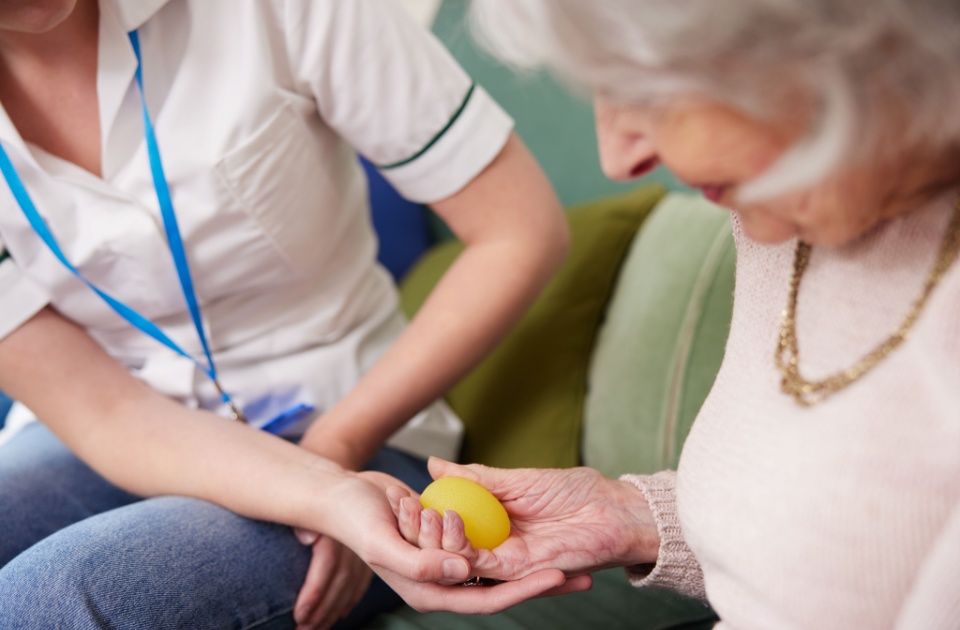
- Strengthening exercises and adaptive tools for arthritis or neurological conditions.
Caregiver Education and Support
- Train family members and caregivers on safe and effective assistance techniques.
- Provide strategies for enhancing communication and fostering positive interactions.
- Educate caregivers on managing and adapting tasks to meet evolving needs, such as using visual cue cards for individuals with memory impairments or implementing color-coded organization systems for medication management
By incorporating personalized strategies and working closely with clients and their support networks, occupational therapy enhances independence and quality of life at home for those who need it most. By helping individuals engage in activities that bring them joy and fulfillment, occupational therapy fosters a sense of purpose, motivation, and overall well-being.

We provide in-home consultations in the San Francisco Bay Area. Contact us for a personalized Physical Therapy, Occupational Therapy, or Speech Therapy assessment in the San Francisco Bay Area: Santa Clara, San Mateo, San Francisco, and Marin Counties
RESOURCES
Interested in learning more? Explore these in-depth articles for deeper insights.
- What is Occupational Therapy? (AOTA) The American Occupational Therapy Association
- Age in Place: Age In Place an organization that has a wealth of resources available on their website including reviews of hearing aids, medical alert systems, and home modification equipment.
- Quality of Life: Effects of community occupational therapy on quality of life, mood, and health status in dementia patients and their caregivers: a randomized controlled trial. The Journals of Gerontology Series A: Biological Sciences and Medical Sciences 62 (9), 1002-1009, 2007.
- The Model of Human Occupation, The University of Illinois Department of Occupational Therapy
- Client centered care: Motivational Interviewing in Health Care by Stephen Rollnick, William R. Miller, and Christopher C. Butler
- Fall Prevention and the Matter of Balance program
GUEST BLOGGER
Patricia Bartz, M.S.OTR/L has been practicing OT since 1986. She has worked in home care for over 30 years, but has also worked in community stroke programs, assisted living facilities, skilled nursing facilities, physical medicine acute care and acute psychiatric units. She attended Boston University for her Master’s Degree in Occupational Therapy, and her undergraduate degree is in Psychology from UC Berkeley. She is married with two adult children. Her hobbies include hiking, knitting, reading, and being with her friends.
DISCLAIMER
his article contains information that is intended to help the readers be better informed regarding exercise and health care. It is presented as general advice on health care and is not intended to be a substitute for the medical advice of a licensed physician. Before beginning any new exercise program it is recommended that you seek medical advice from your personal physician. The reader should consult with their doctor in any matters relating to his/her health.