
(And When to See a Physical Therapist)
Simple, evidence-based tests to assess balance, strength, and mobility. And what to do if you’re at risk.

Falls are more than just “a slip.” They’re a major health event, especially as we age. In fact, according to the Centers for Disease Control and Prevention, 1 in 4 adults over age 65 falls each year. Even more concerning:
- Falls are the leading cause of injury-related deaths in older adults
- They’re a major cause of hip fractures, head injuries, and loss of independence
- After a fall, many people develop a fear of falling, which actually leads to less movement, more weakness, and higher risk of future falls
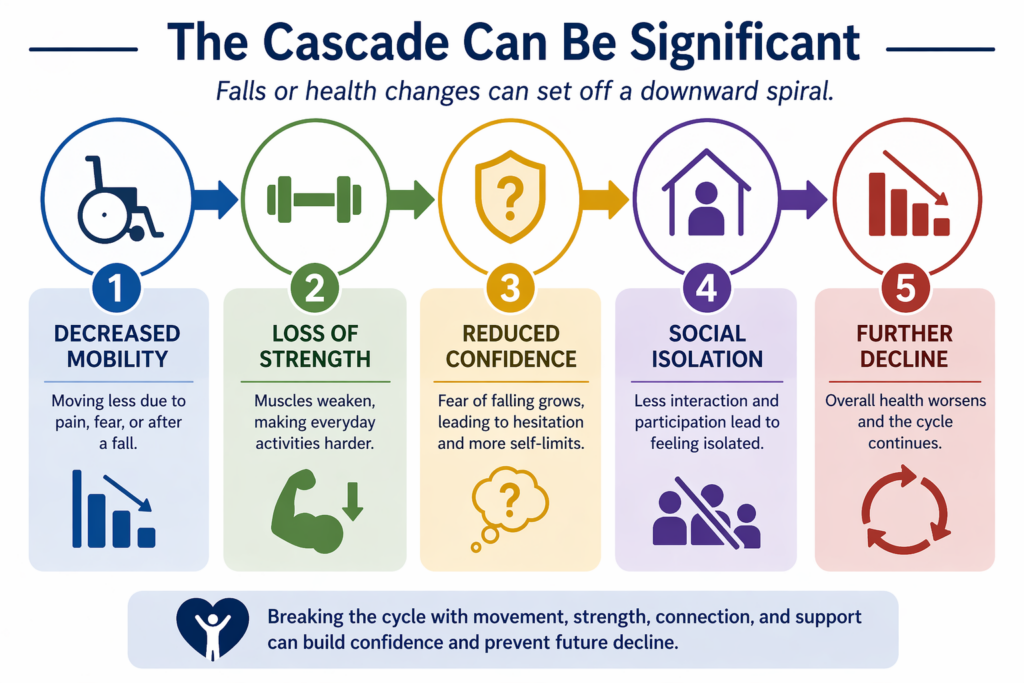
The cascade can be significant: decreased mobility → loss of strength → reduced confidence → social isolation → further decline.
The good news? Many falls are preventable, and it starts with awareness.
Are you at risk for falls?
Here’s a simple truth: we all “almost fall” more often than we realize.
You trip on a curb, catch yourself.
You lose balance reaching, but recover.
These near-misses happen because your muscles and nervous system react quickly and automatically.
But with more sedentary lifestyles, especially as we age, we can lose:
- Strength
- Reaction time
- Balance strategies
When that happens, those small “catches” become actual falls.
Fall Risk Assessment At Home – Quick Self Check
These simple screening tests are commonly used in clinics and can give you a quick snapshot of your fall risk: If you cannot do one or more of the following, your fall risk may be increased:
- Stand up from a chair 5 times in < 12 seconds
- Walk 3 meters, turn, and sit in < 10 seconds
- Stand on one leg for at least 5 seconds
- Perform 20 heel raises
If you’re unsure, or if any of these feel difficult, it’s worth discussing with your doctor and consulting a physical therapist.
Can you stand up from a chair 5 times in less than 12 seconds?
The Chair Rise Test
What it tells you:
Lower body strength and functional mobility
How to do it:
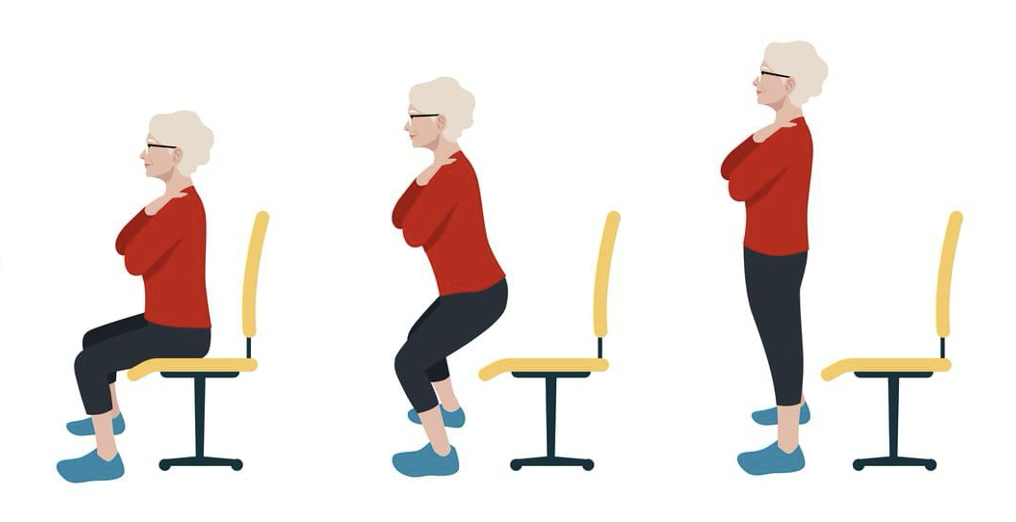
- Place a chair against a wall
- Cross your arms over your chest (no pushing off)
- Stand up and sit down 5 times as quickly as possible
- Time yourself
How did you do?
- Under 12 seconds: Generally considered normal
- Over 12 seconds: May indicate increased fall risk and should be further assessed
Why this matters
The Chair Rise Test measures lower-body strength and power, which are essential for safe, independent mobility. These are the muscles you rely on every time you stand up from a chair, climb stairs, or rise quickly to regain balance.
In real life, movement is rarely slow or predictable. If you begin to lose balance or need to move quickly to steady yourself, you must be able to generate force rapidly through your legs. When leg strength or power is reduced, even simple tasks like standing up can become effortful, and your ability to react quickly to a loss of balance is limited.
If standing up from a chair is hard, your body may not be able to react quickly enough to prevent a fall.
Can you walk 3 meters and return to a chair in less than 10 seconds?
The Timed Up and Go (TUG) Test
What it tells you:
Mobility, balance, and gait abilities
How to do it:
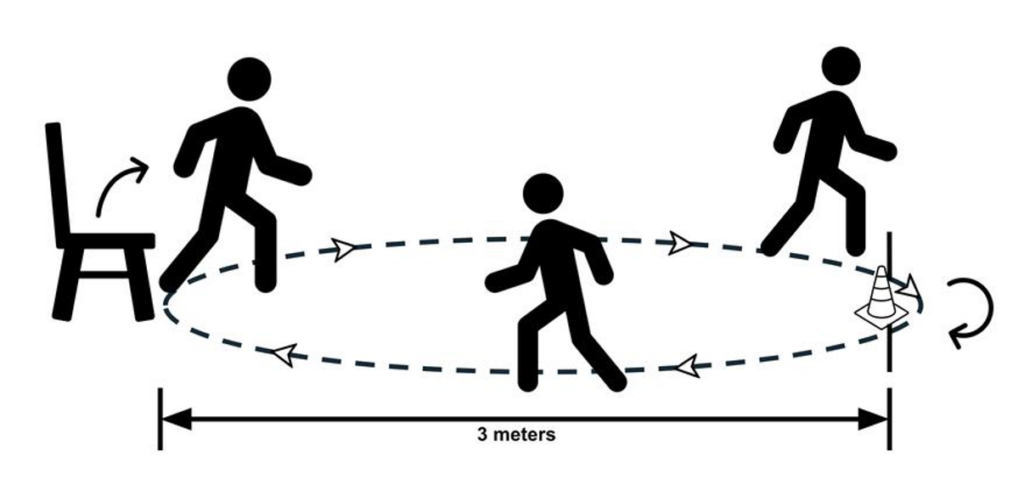
- Use a standard chair placed against a wall
- Measure 3 meters (about 10 feet) and mark it
- Start seated, back against chair
- Time yourself:
- Stand up
- Walk to the marker
- Turn around
- Walk back and sit down
Note: You may use your usual assistive device (cane, walker)
How did you do?
- Under 10 seconds: Generally considered normal
- Over 10 seconds: Indicates increased fall risk and should be further assessed
Why this matters
The Timed Up and Go (TUG) test is a quick way to assess how well you can move through everyday functional tasks that require strength, balance, coordination, and safe walking speed. It closely reflects common real-life movements. Because these movements are used constantly in daily life (getting up from the couch, navigating your home, or walking in the community), even small delays or instability can signal an increased risk for falls.
A time greater than 10 seconds suggests that these basic mobility skills may be slowed or less efficient, which can translate into reduced independence and a higher likelihood of imbalance during routine activities.
Can you stand on 1 leg for more than 5 seconds?
The Single-Leg Stance Test
What it tells you:
Static balance skills
How to do it:
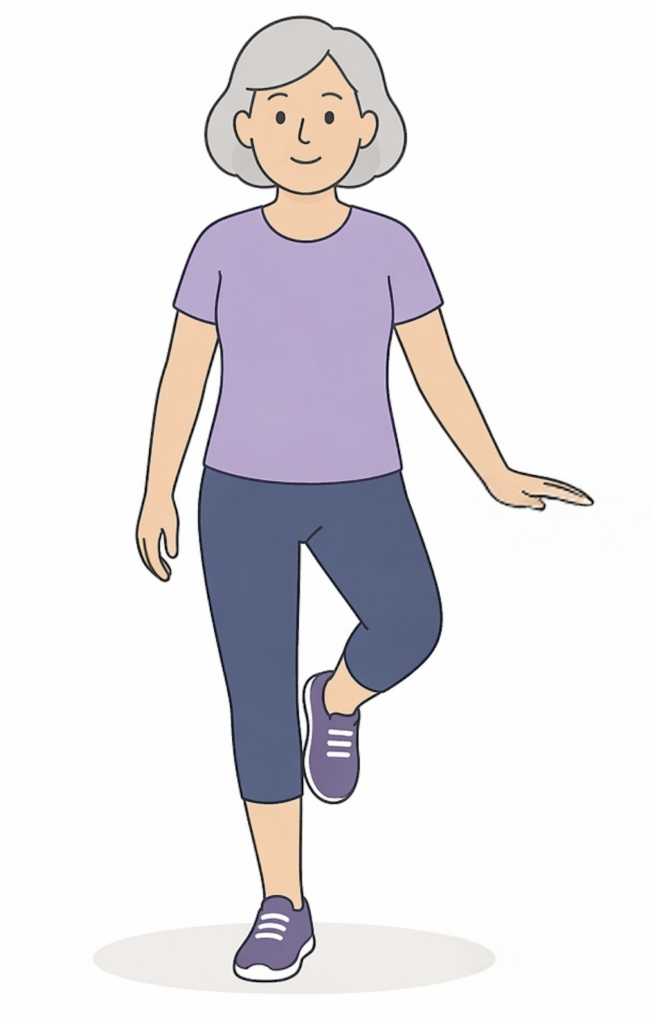
- Stand near a counter or sturdy surface (just in case)
- Lift one foot off the ground
- Time how long you can stay on 1 foot without holding on
How did you do?
- Under 5 seconds: Suggests increased fall risk and should be further assessed
- Norms for adults aged 60–69 are at least 32 seconds
- Norms for adults aged 70-79 are at least 22 seconds
- Norms for adults 80 plus are at least 11 seconds
Why this matters
The Single-Leg Stance Test is a simple way to assess your static balance, but it also reflects the strength and control of your ankles, hips, and core muscles. Walking is essentially a repeated series of controlled single-leg stands; each step requires you to balance on one leg while the other swings forward.
If this position is difficult or unsteady, everyday walking becomes less stable, especially when the surface changes or when unexpected challenges occur (such as uneven ground, turning quickly, or stepping over obstacles like a crack in the sidewalk or a curb). Even brief instability in single-leg balance can translate into a higher risk of missteps and falls during routine activities.
Being able to hold this position confidently is an important indicator of lower-body strength, postural control, and overall mobility safety.
Can you do 20 heel raises?
The Heel Raise Test
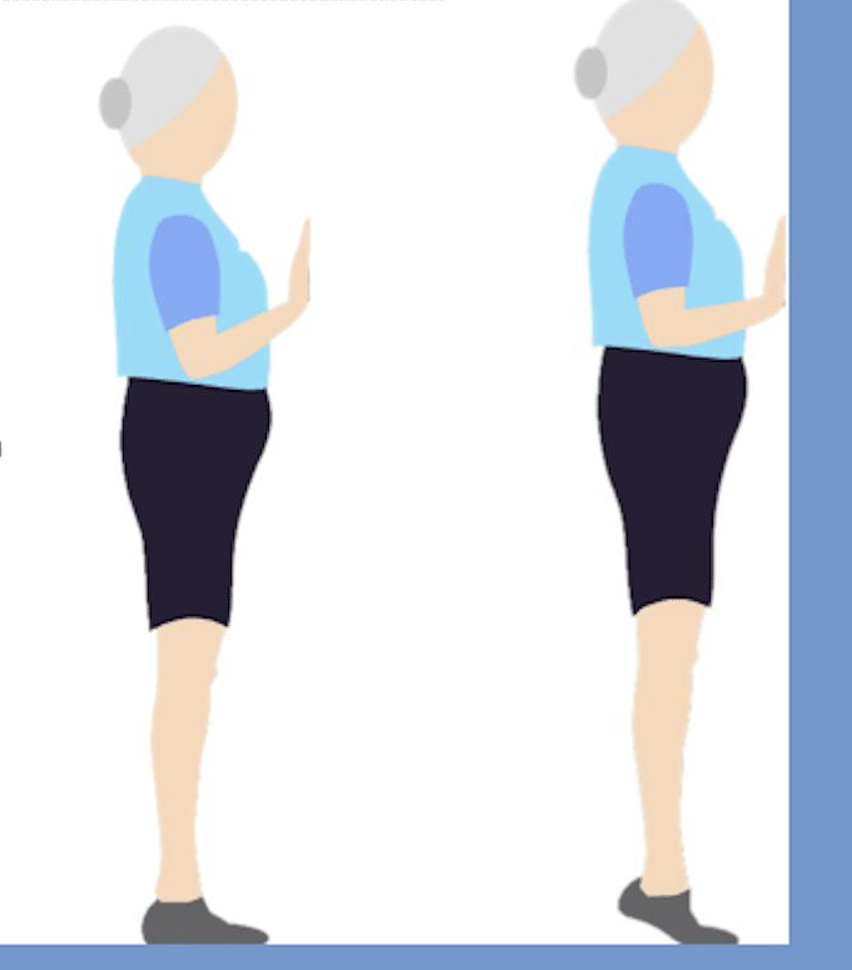
What it tells you:
Calf strength and endurance (critical for walking and balance recovery)
How to do it:
- Stand barefoot facing a wall, hands lightly touching the wall for balance
- Raise your heels up and down at a steady pace (~1 per second)
- Keep knees straight
- Count reps that reach at least half the full height
How did you do?
- Over 20 reps: Generally considered normal
- Under 20 reps: Indicates weakness depending on your age
- Can’t do 1 rep: Indicates the need for an assistive device (cane or walker)
Why this matters
The Heel Raise Test measures the strength and endurance of your calf muscles, which play a critical role in both walking and balance recovery. Your calf muscles are one of your body’s first “emergency responders” when you start to lose balance. If you trip, slip, or begin to fall forward, strong calf muscles help you quickly shift your weight, push back up, and regain stability. When this muscle group is weak or fatigues easily, it becomes much harder to correct a loss of balance; making even small missteps more likely to turn into a fall.
Reduced performance on this test is strongly associated with increased fall risk because it reflects limited ability to both generate forward movement and recover from sudden instability.
What Should You Do Next?
If you didn’t pass one or more of these tests, don’t panic but don’t ignore it either. Strength, balance, and reaction time can all improve at any age.
Step 1: Talk to Your Doctor
Rule out contributing factors like:
- Medication side effects
- Blood pressure issues
- Vision or inner ear problems
Step 2: See a Physical Therapist
If your body can “catch” you, it will.
If it can’t yet, you can train it to.
A PT can:
- Perform a comprehensive balance assessment
- Identify why you’re at risk (strength, vestibular, sensation, reaction time)
- Design a targeted, progressive program
Step 3: Start Moving (Safely)

The best interventions are simple but powerful:
STRENGTH TRAINING (especially legs and hips) including FUNCTIONAL MOVEMENTS (sit-to-stand, step-ups).
See our blogs 50+ and Thriving: The Art of Building Strength and Why Plyometrics Matter at Any Age.
BALANCE CHALLENGES (progressively harder)
See our blog Staying Steady: The Role of Balance Training in Active Aging.
WALKING PROGRAMS
See our blogs Step into Wellness: Unveiling the Benefits of Walking and Walking Still Works.
Step 4: Modify Your Environment
See our prior blogs, Aging Safely in Your Own Home: A Comprehensive Guide and Safer Homes Start with Better Lighting, for a deeper dive into this subject.
The earlier you identify and address fall risk, the easier it is to stay strong, independent, and confident in your daily life.
Be Active Be Well
Ready to get moving again—safely and confidently?
Whether you’re dealing with chronic pain, recovering from an injury, or simply feeling stuck, our expert team is here to help. We offer personalized Physical Therapy, Occupational Therapy, and Speech Therapy assessments, all from the comfort of your home.
Serving the San Francisco Bay Area—including Santa Clara, San Mateo, San Francisco, and Marin Counties—we bring compassionate, evidence-based care right to your doorstep.
Let’s work together to keep your body in motion and your mind at ease. Contact us today to get started!
Joanne Bedwell, PT, is the Resident Blogger at Be Active Be Well. Based in San Francisco, she lives with her husband and two nearly grown daughters. With over 25 years of experience as a physical therapist, she provides in-home client care and teaches fitness classes both in person and online.
DISCLAIMER: This article is intended to provide general information to help readers make informed decisions about exercise and health. It is not a substitute for professional medical advice, diagnosis, or treatment. Always consult your physician or another qualified health provider before starting any new exercise program or making changes to your health care. Never disregard or delay seeking medical advice because of something you have read in this article.